
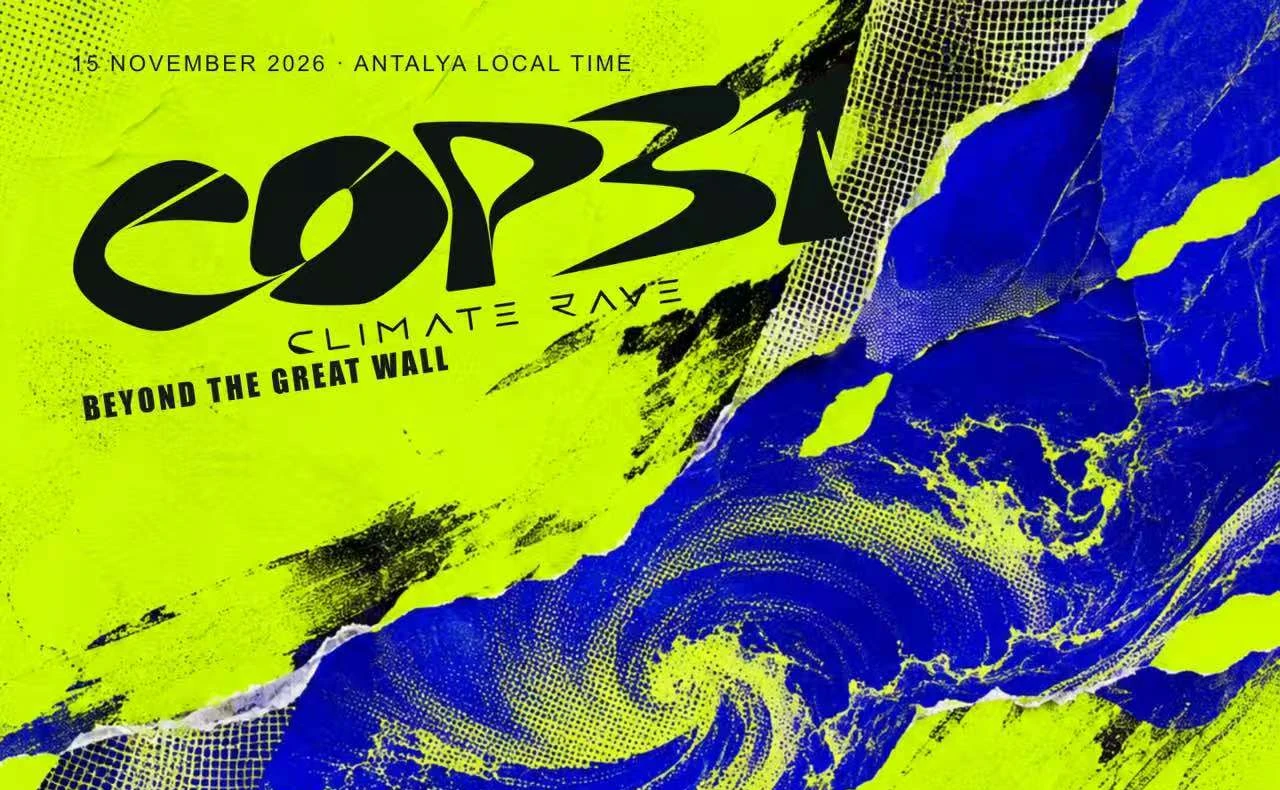
COP31 Climate Rave
Beyond the Great Wall
A night in Antalya’s Old Town for the COP31 community, with new Chinese club sounds and dance-floor classics. Two sets of posters document the event’s visual identity across 40 designs.
The Chinese stories in the posters
Forty posters bring figures from Chinese folklore, opera and New Year prints together with magnetic tape, vinyl and club lights. Select any poster for a closer look.
Side A · New Year Prints
Door gods, dancing lions, carp and the Immortals of Harmony step out of Chinese New Year prints, reimagined in blue ink, paper cuts and silver foil alongside turntables, headphones and club lights.
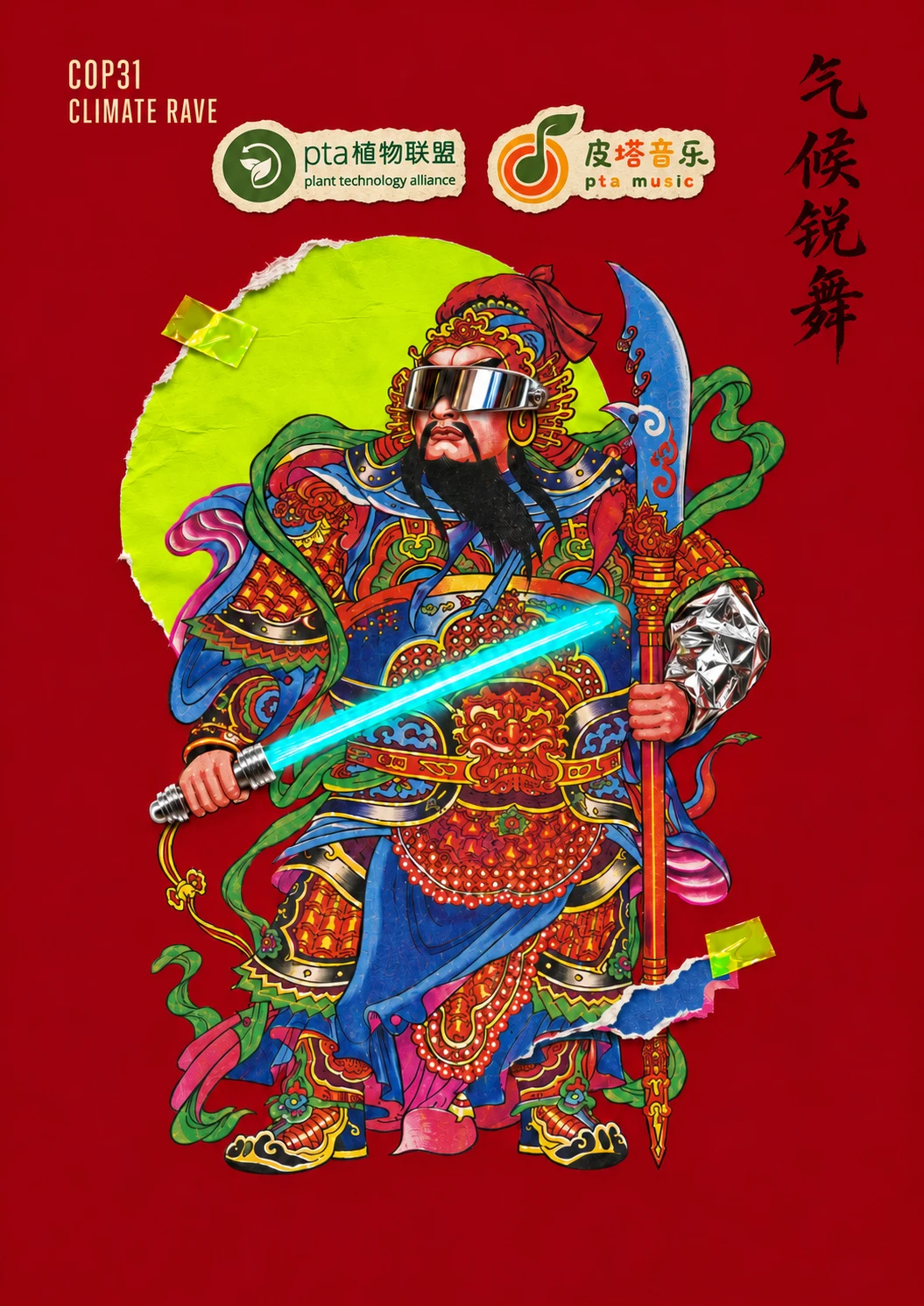
Door Gods in Electric Light
Martial door gods often appear as generals in armor. Their portraits are pasted on gates at Chinese New Year to protect the household. Here, a mirrored visor and flashes of light turn that guardian into a figure from the dance floor.
Cultural background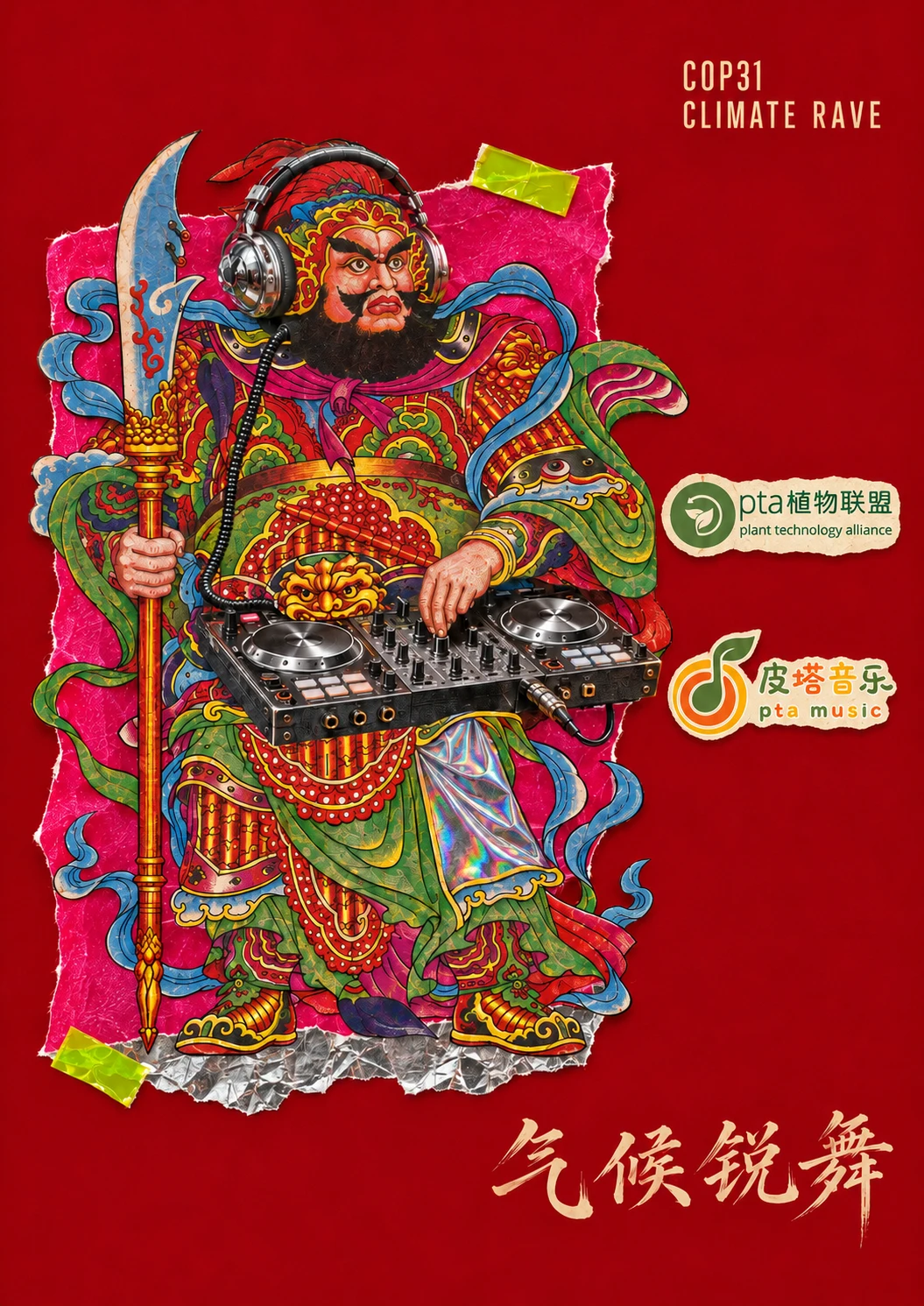
Twin Decks on Paper
Armor and weapons give martial door gods their authority in New Year prints. This paper warrior steadies a blade in one hand and works a pair of decks with the other, against a backdrop of torn-paper collage.
Cultural background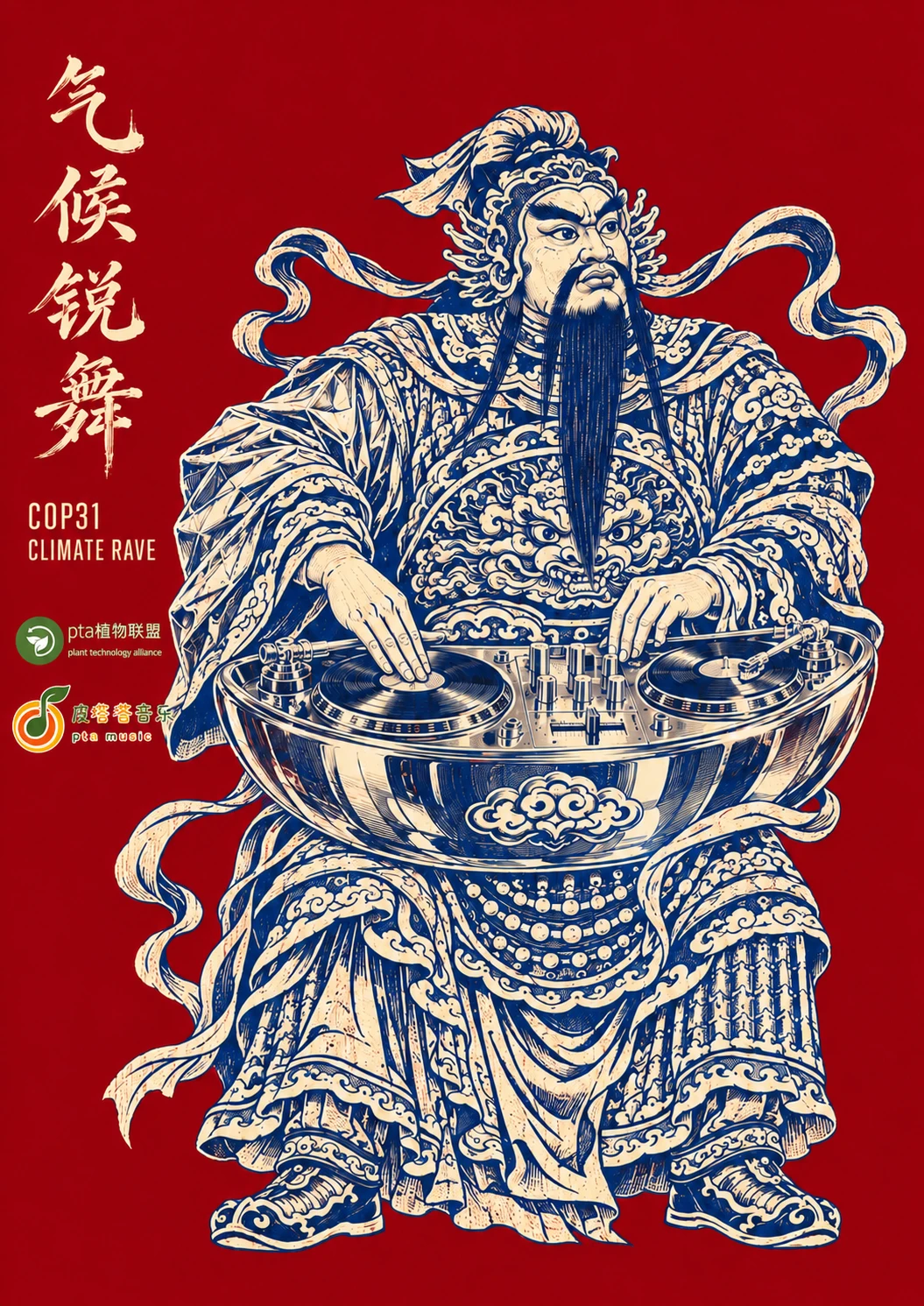
Blue Ink, Vinyl Groove
The long beard, layered armor and frontal pose recall a guardian in a New Year print. Limiting the palette to blue and white brings out the patterns on his armor and the rings of the records.
Cultural background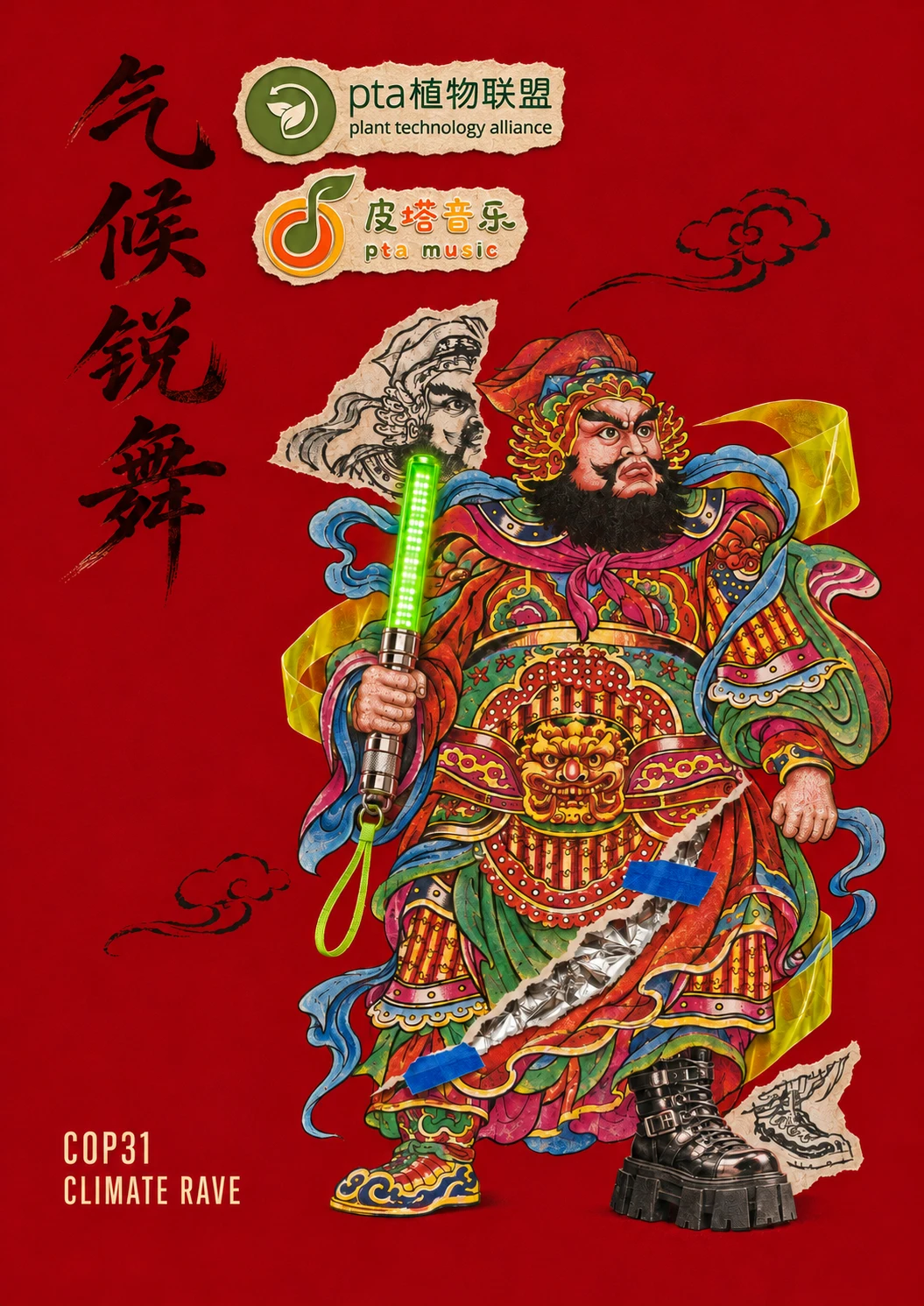
Night Watch on Xuan Paper
The armored figure evokes the martial door gods in Chinese New Year prints, traditionally pasted on doors to protect the household. The title refers to Xuan paper, a handmade paper prized for Chinese calligraphy and painting. A glow stick and platform boot bring the guardian into club culture.
Cultural background · Xuan papermaking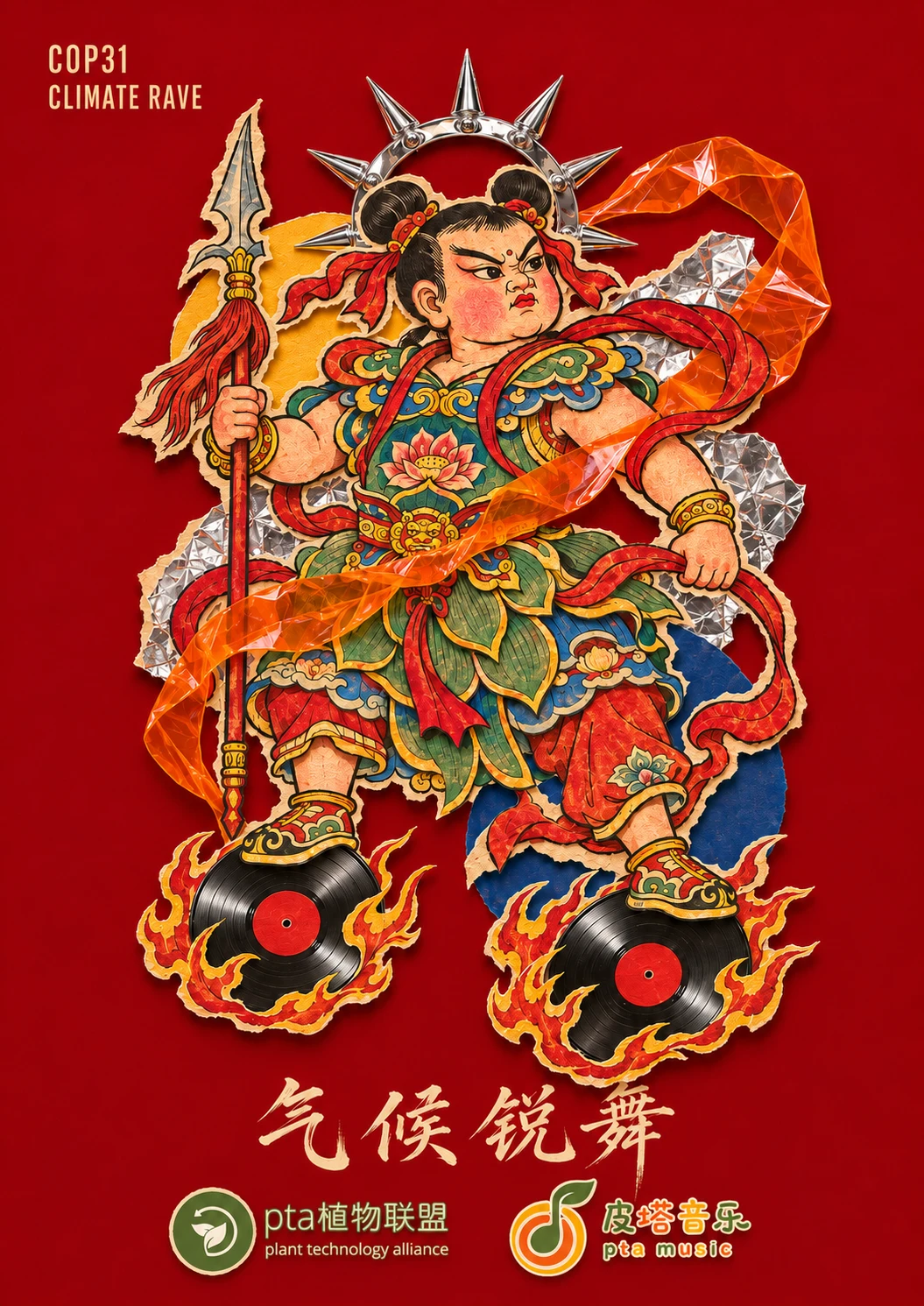
Nezha in Paper and Flame
Nezha is a young warrior deity familiar from The Investiture of the Gods. A spear, a red sash and the Wind-Fire Wheels are among his emblems. The cut-paper silhouette catches him in motion, with a record blazing under each foot.
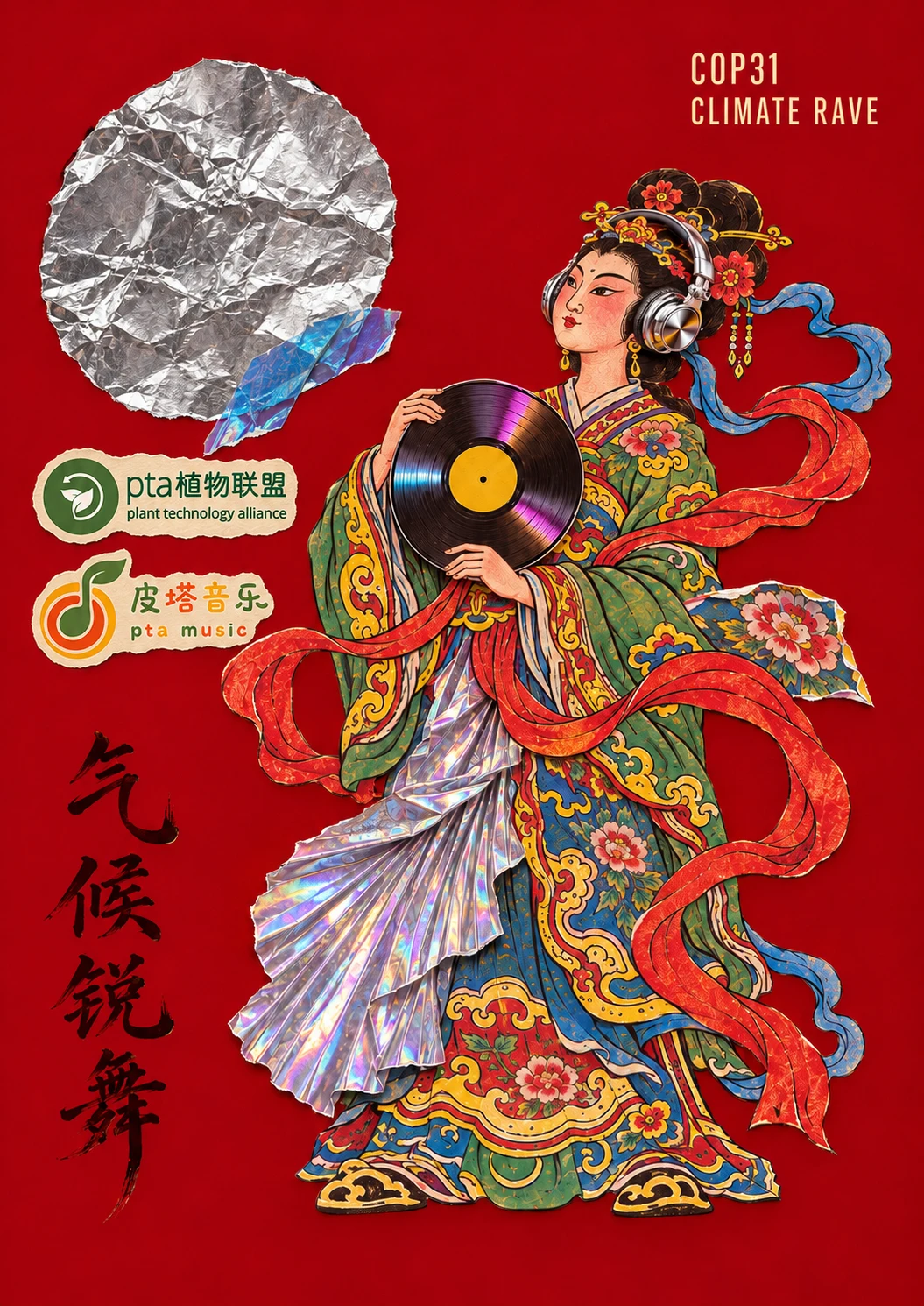
Silver Foil Moon Palace
The foil moon and the woman’s flowing robes evoke Chang’e, who flew to the Moon Palace after taking an elixir of immortality. Her story is often told during the Mid-Autumn Festival. Here, the moon’s resident wears headphones and holds a vinyl record.
Cultural background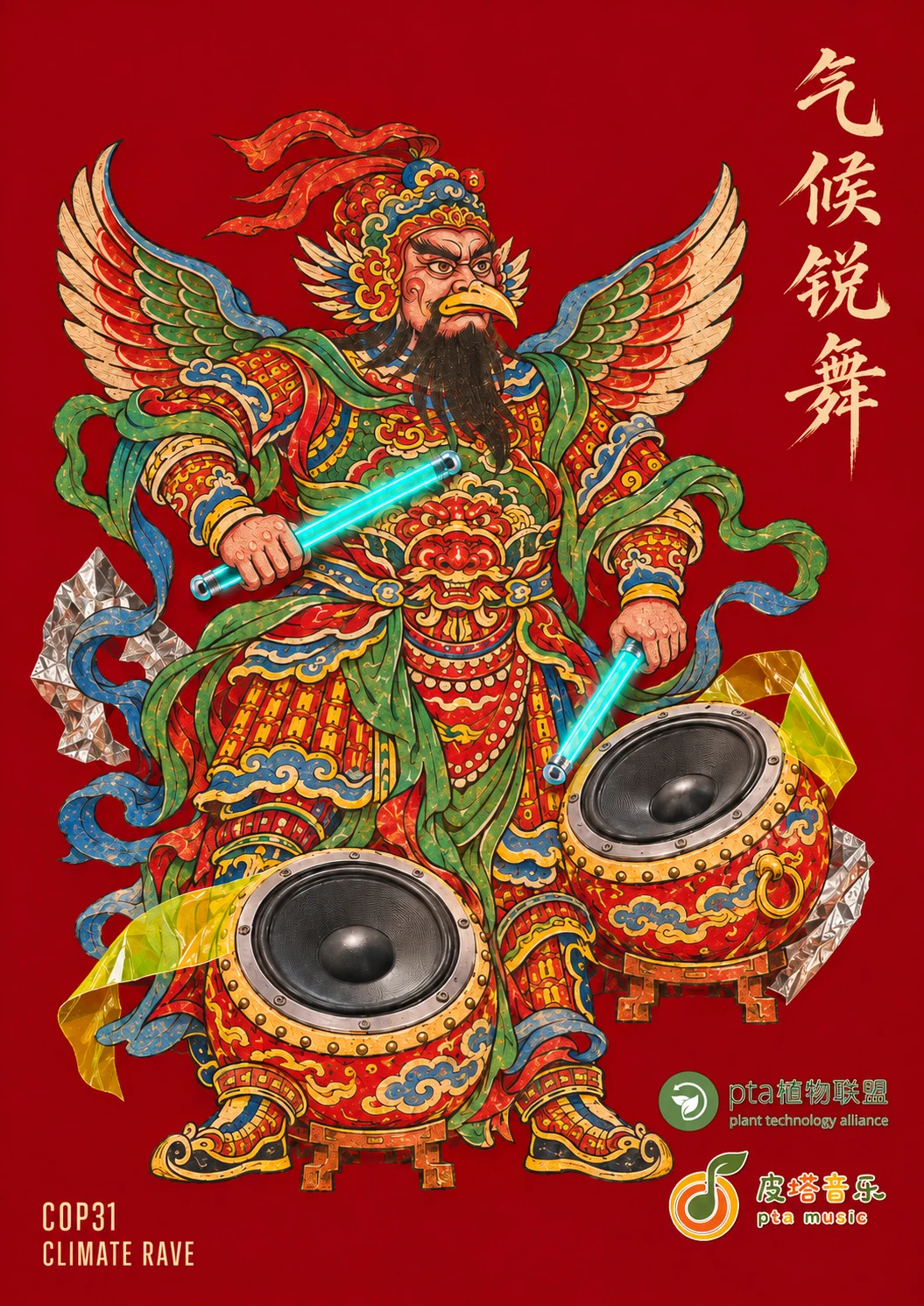
Thunder Drums in Colour
Leigong, the thunder god, is often pictured with wings and percussion that give thunder a visible form. Here, speakers take the place of drumheads, inside shapes that recall colour-printed New Year pictures.
Cultural background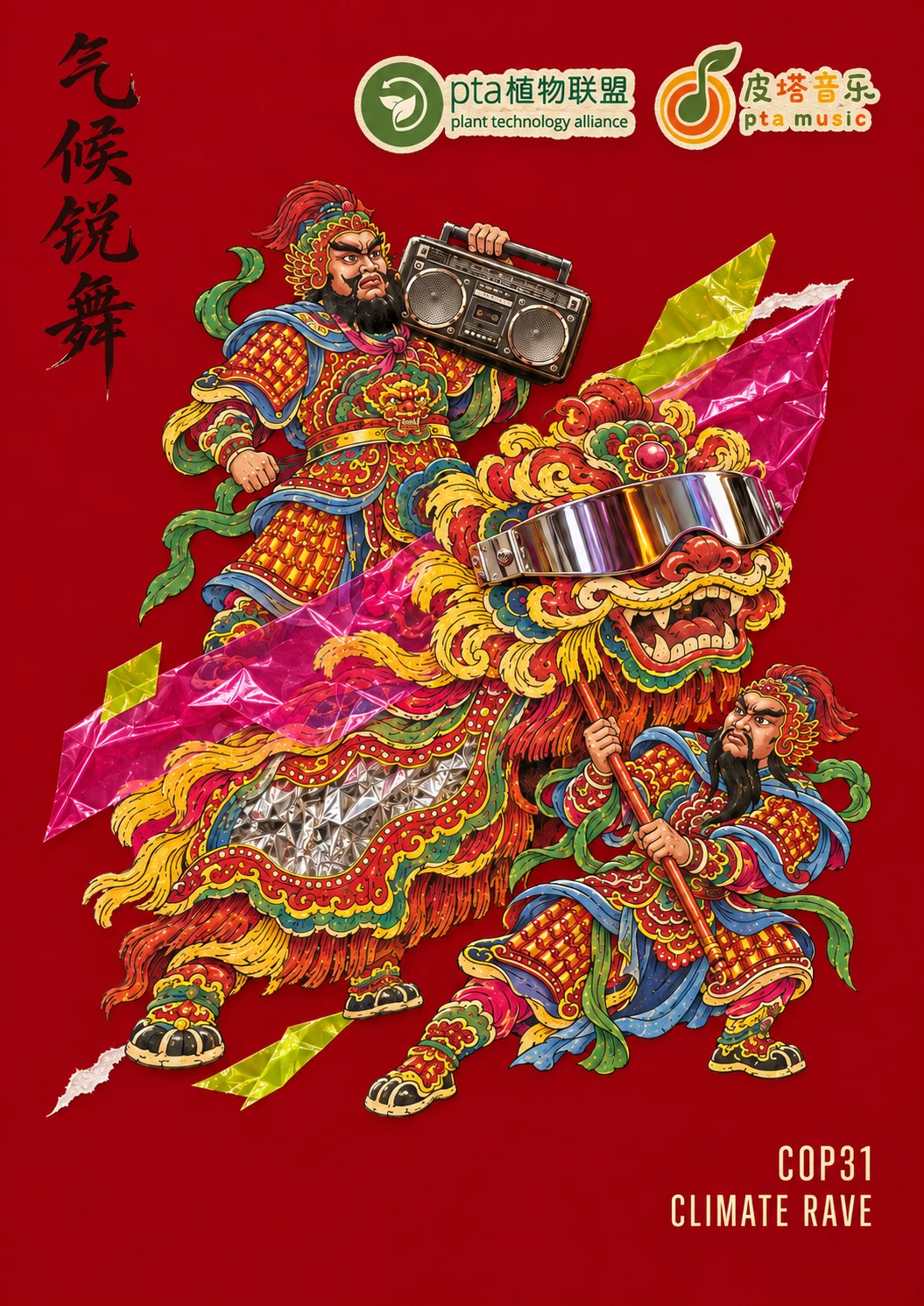
Lion Dance Sticker
In the southern Chinese lion dance, performers move the head and body together to the rhythm of drums and gongs. Here, bright torn paper, a cassette player and a mirrored visor sit around the lion like stickers on a New Year print.
Cultural background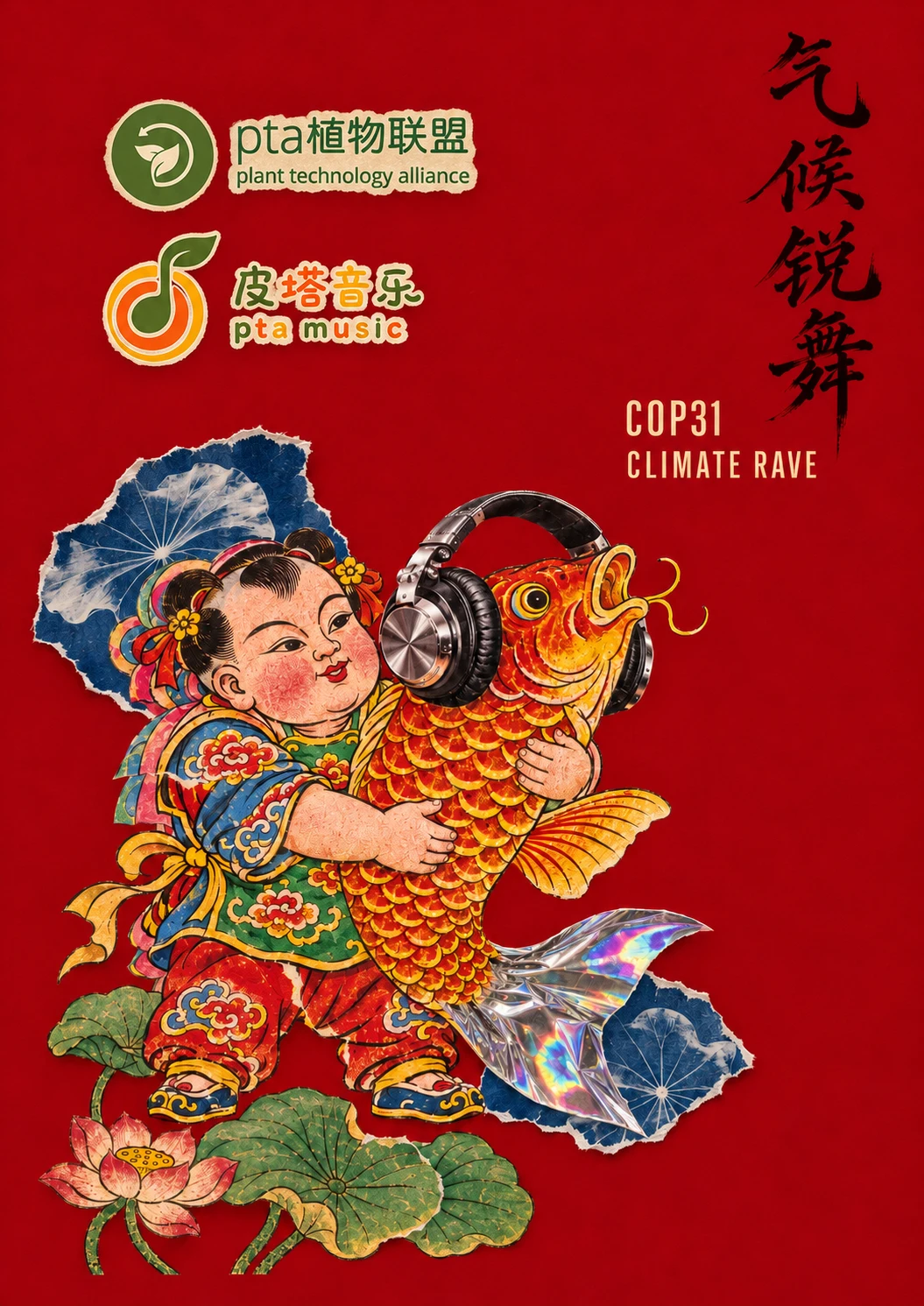
Carp in Cyanotype Blue
A child, a fish and a lotus evoke a New Year wish for abundance year after year. In Chinese, the words for lotus and continuity, and for fish and surplus, sound alike. Here, cyanotype-like blue makes the headphone-wearing carp glow gold.
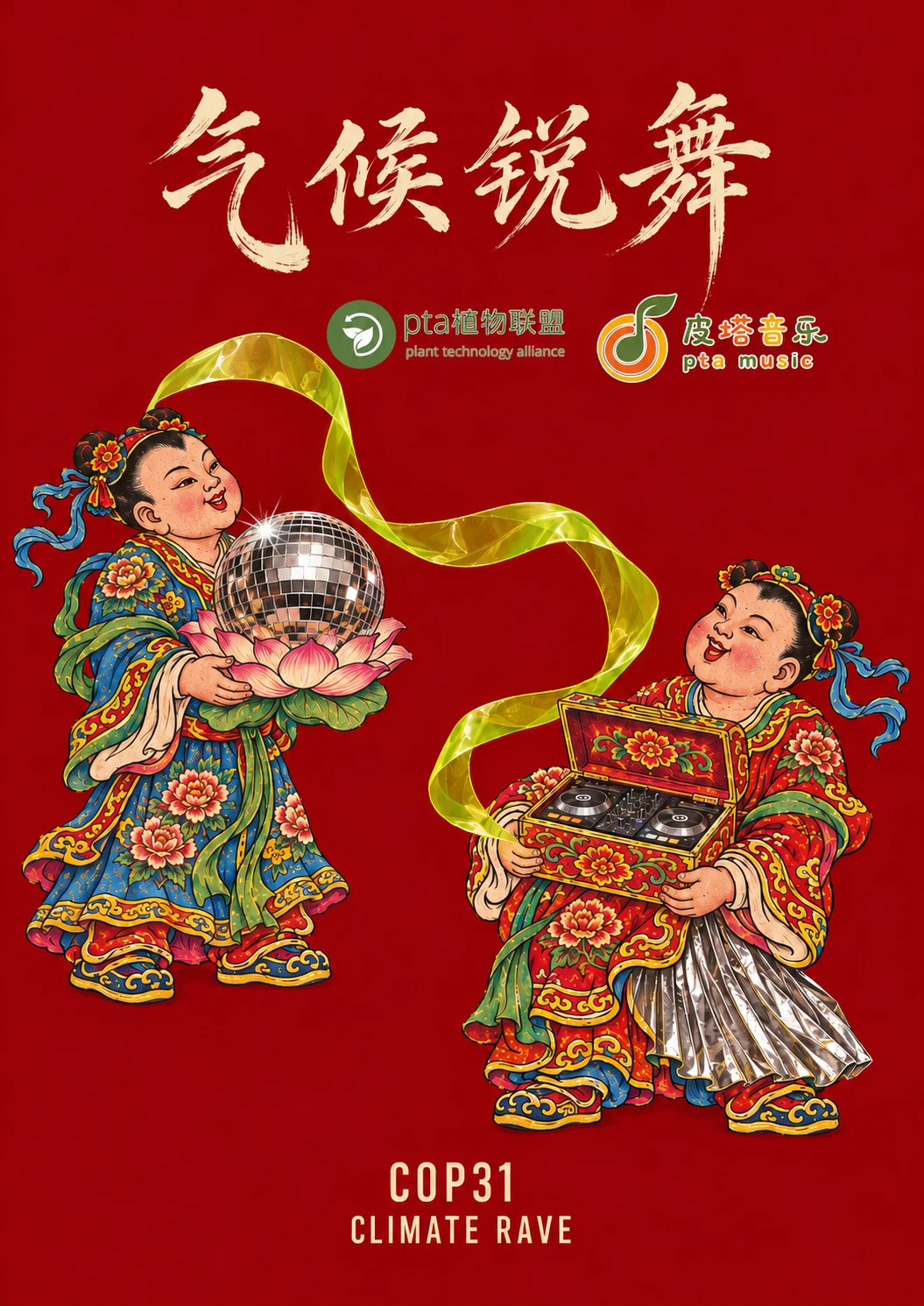
Harmony in a New Year Print
The Hehe Immortals are a folk pair associated with harmony. They are often pictured smiling, with a lotus and a box. In this print, a mirror ball and an open box sit at either end of a flowing gold ribbon.
Cultural background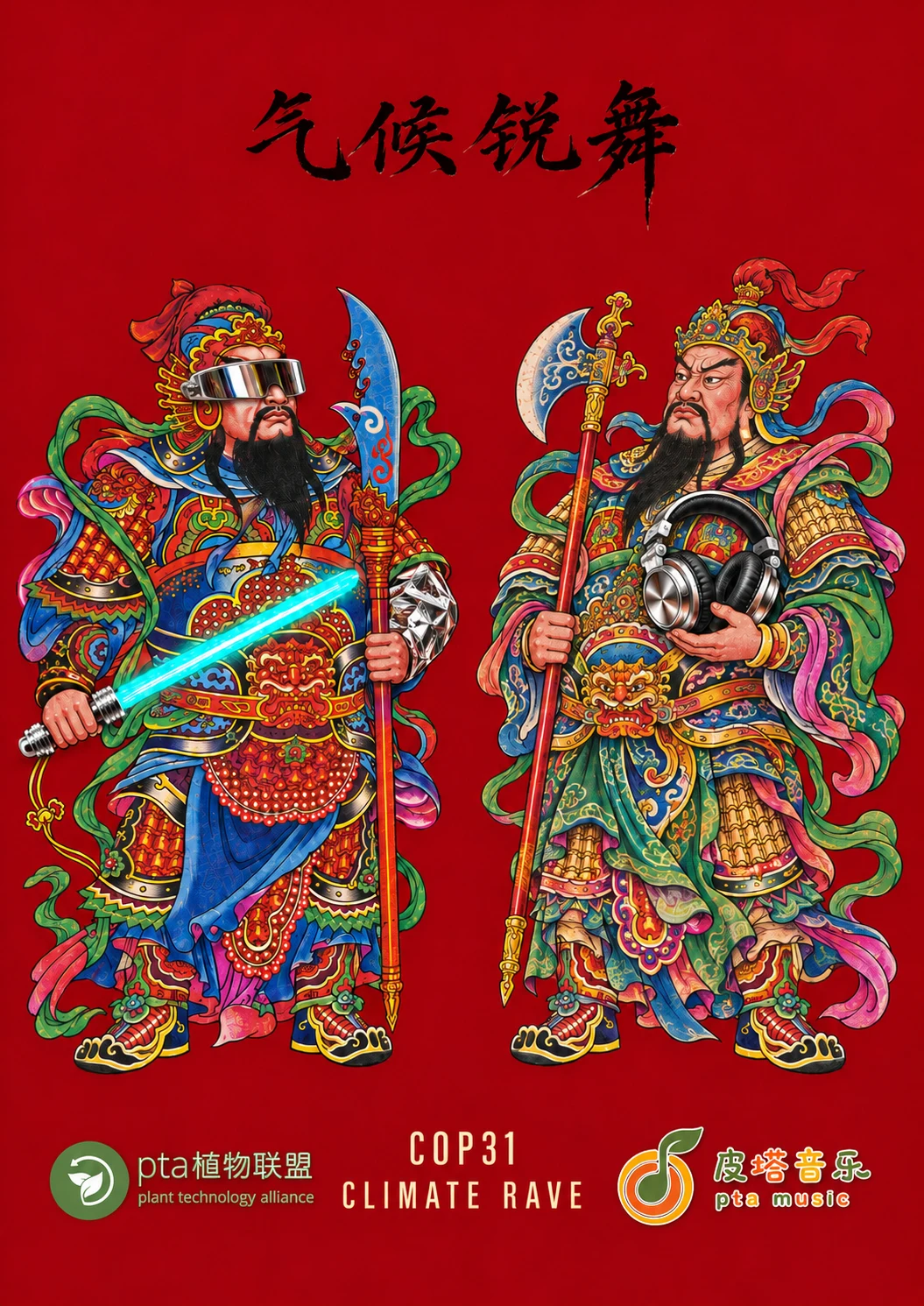
A Pair of Door Gods
Door gods are often pasted in pairs across the two leaves of an entrance. The generals Qin Qiong and Yuchi Gong are a familiar example. These two keep the paired composition, with electric light on one side and a record on the other.
Cultural background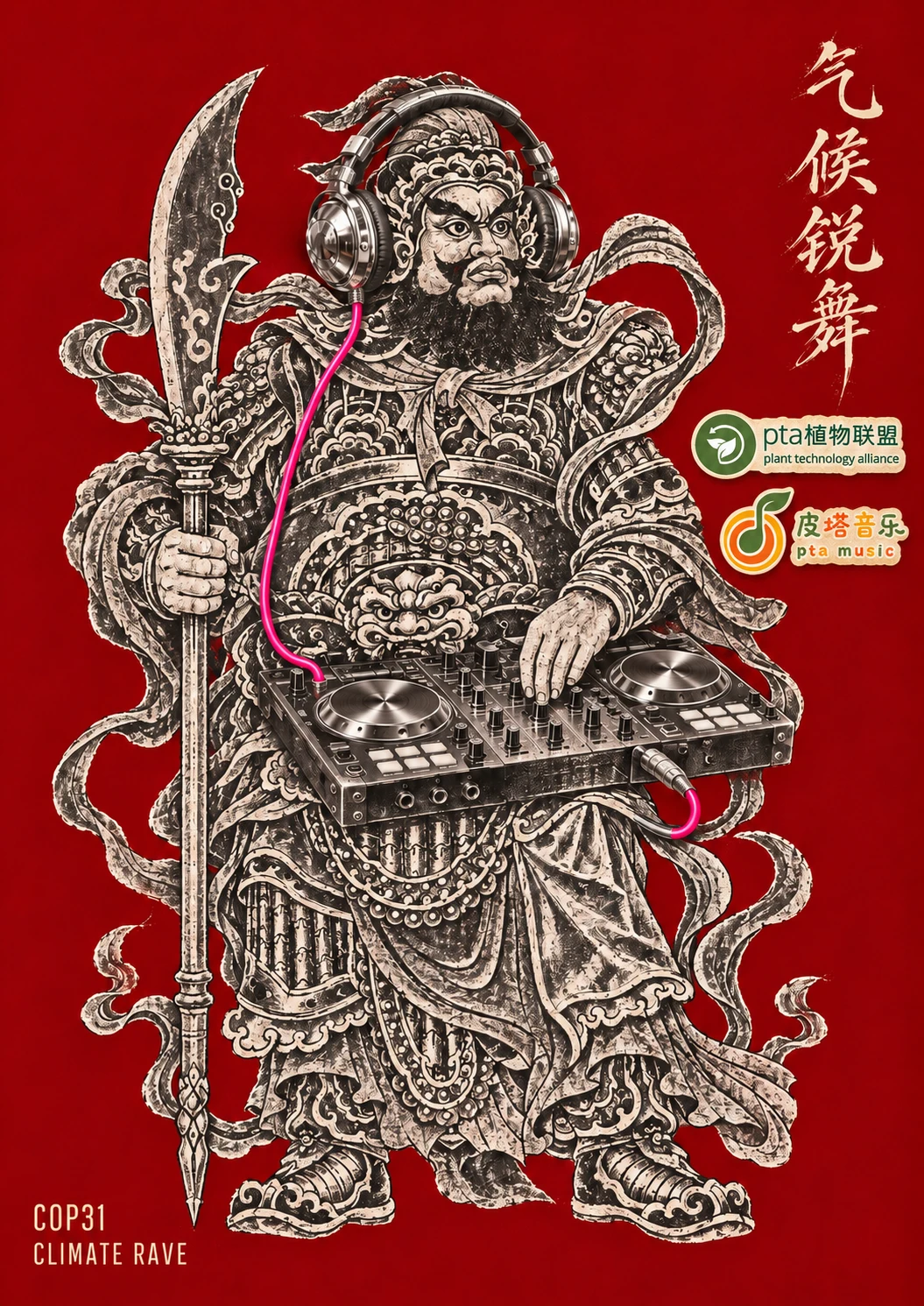
An Ink-Rubbing Soundstage
Traditional rubbings transfer patterns from a carved surface to paper. The stark monochrome treatment here gives the guardian’s armor and decks the texture of a rubbing, broken by one bright pink headphone cable.
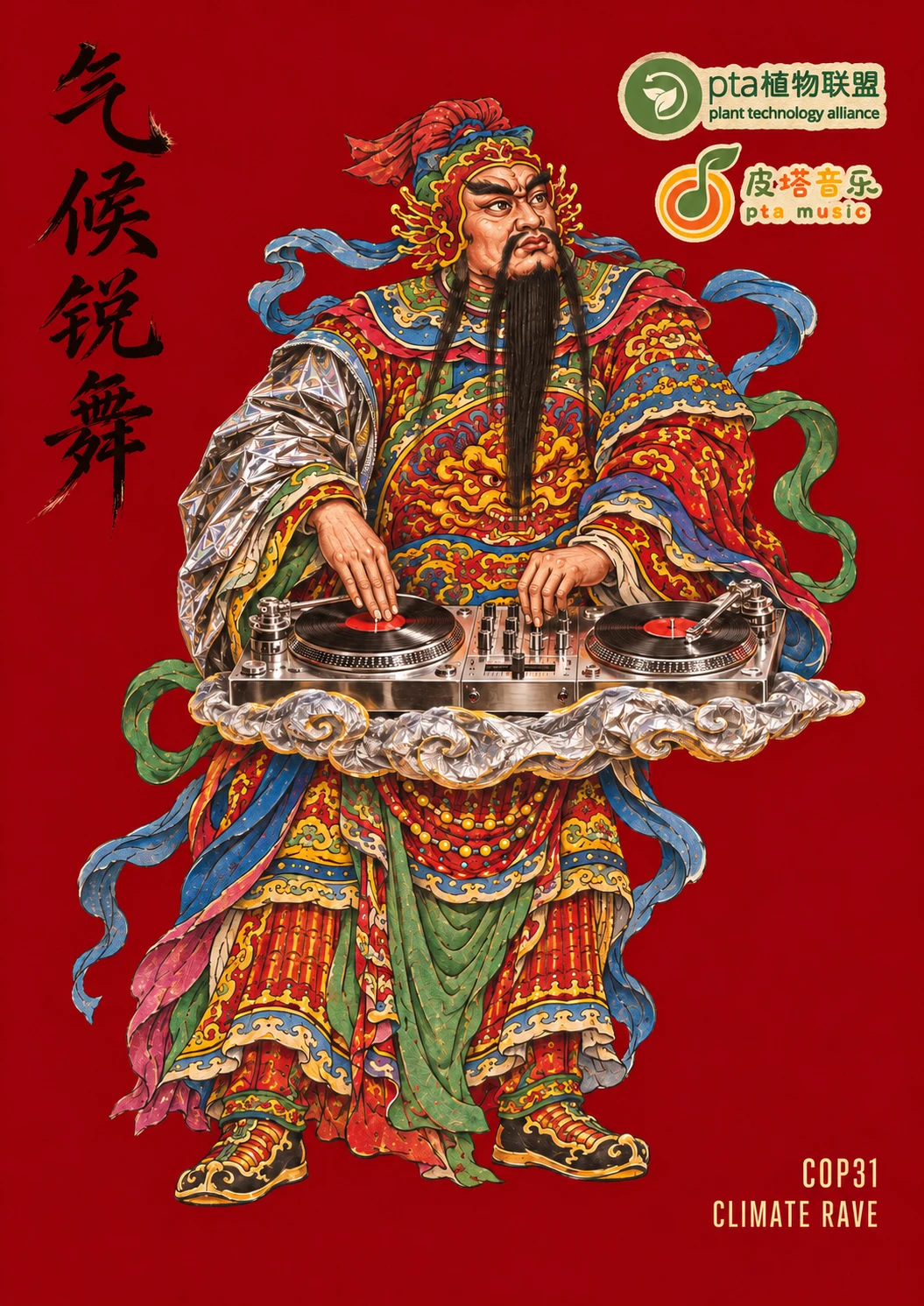
Lord Guan on Silk
Lord Guan was Guan Yu, a general of the Three Kingdoms era. Fiction, opera and popular worship made him a symbol of loyalty and honour, recognisable by his red face and long beard. Here, silk-painting textures frame a cloud-shaped DJ console.
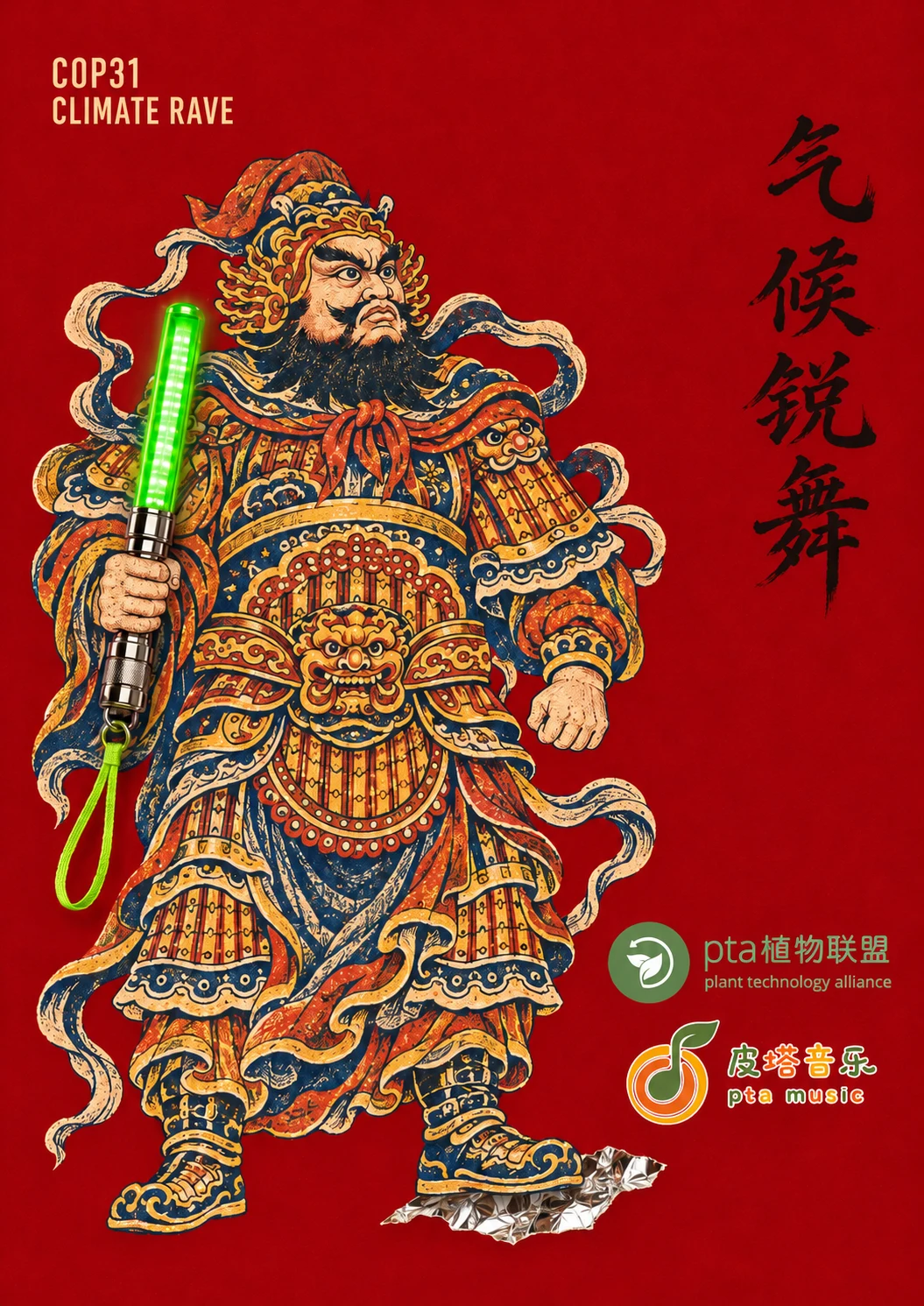
Stencil-Print Guardian
Armored protectors with fierce expressions are a familiar image of guardianship. Flat areas of colour recall stencil printing, with a green glow stick setting the figure off against the red.
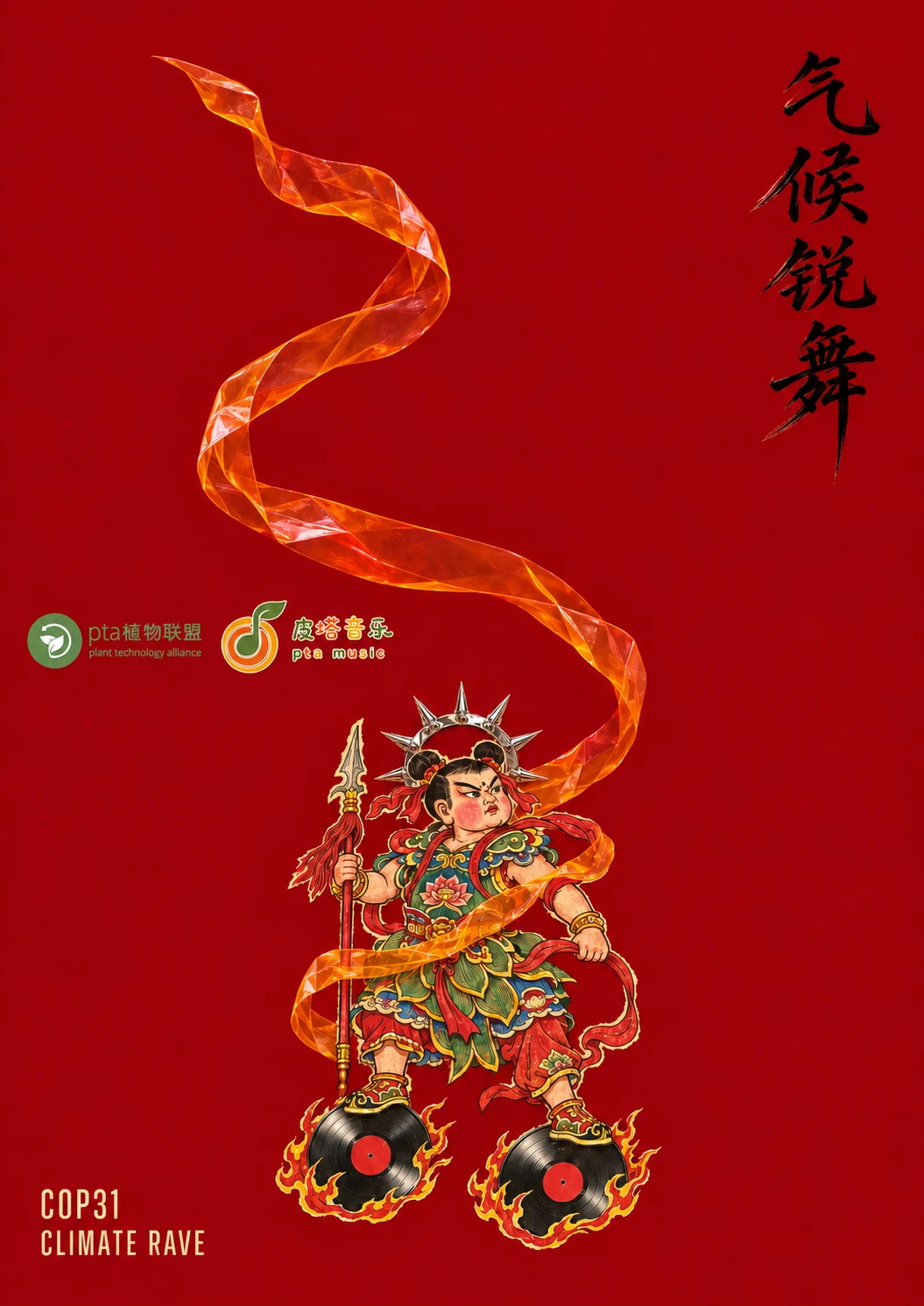
Room for Nezha
Nezha’s flowing sash and Wind-Fire Wheels identify him even from the corner of the composition. The open field of red gives the sash room to show the young deity in motion.
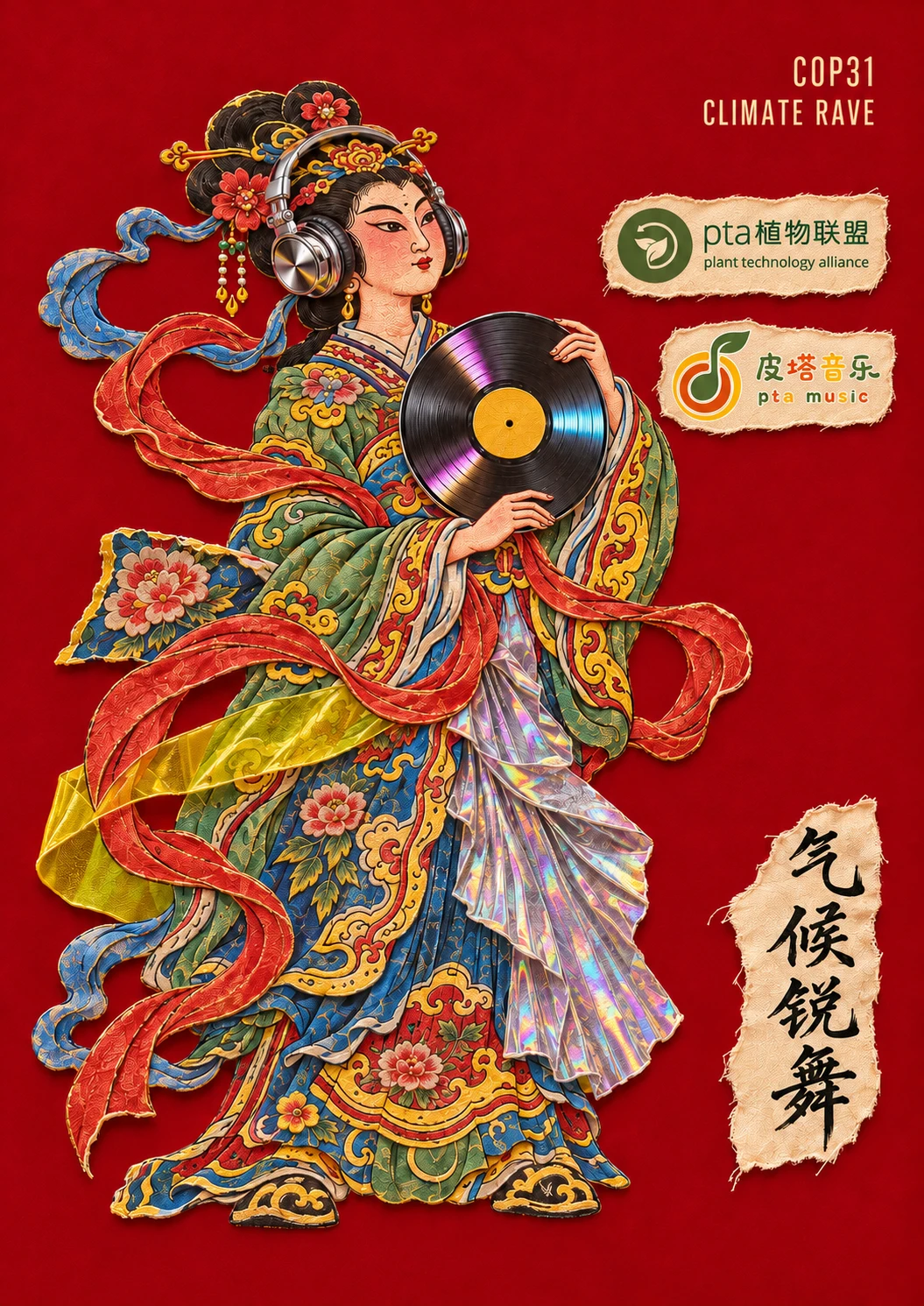
Woven with Celestial Sound
Chang’e’s flight to the moon after taking an elixir of immortality is told at the Mid-Autumn Festival. This version draws the eye to her robes, where brocade and ribbons meet the concentric grooves of a vinyl record.
Cultural background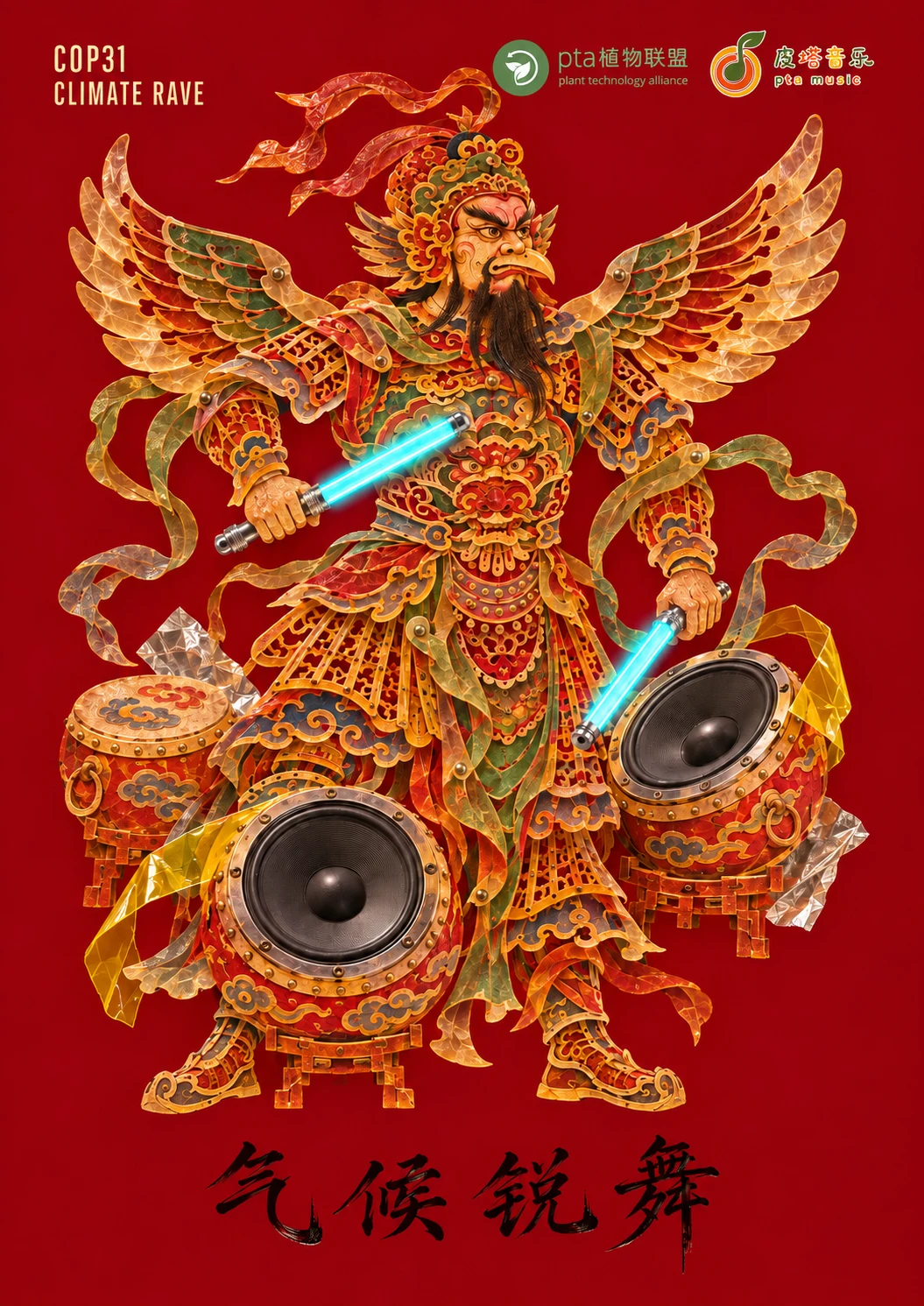
Silhouette of the Thunder God
Leigong is often pictured as a winged deity with a mallet, giving the sound of thunder a visible form. This version picks out the wings and sticks in gold, with a pair of speakers poised like thunder drums.
Cultural background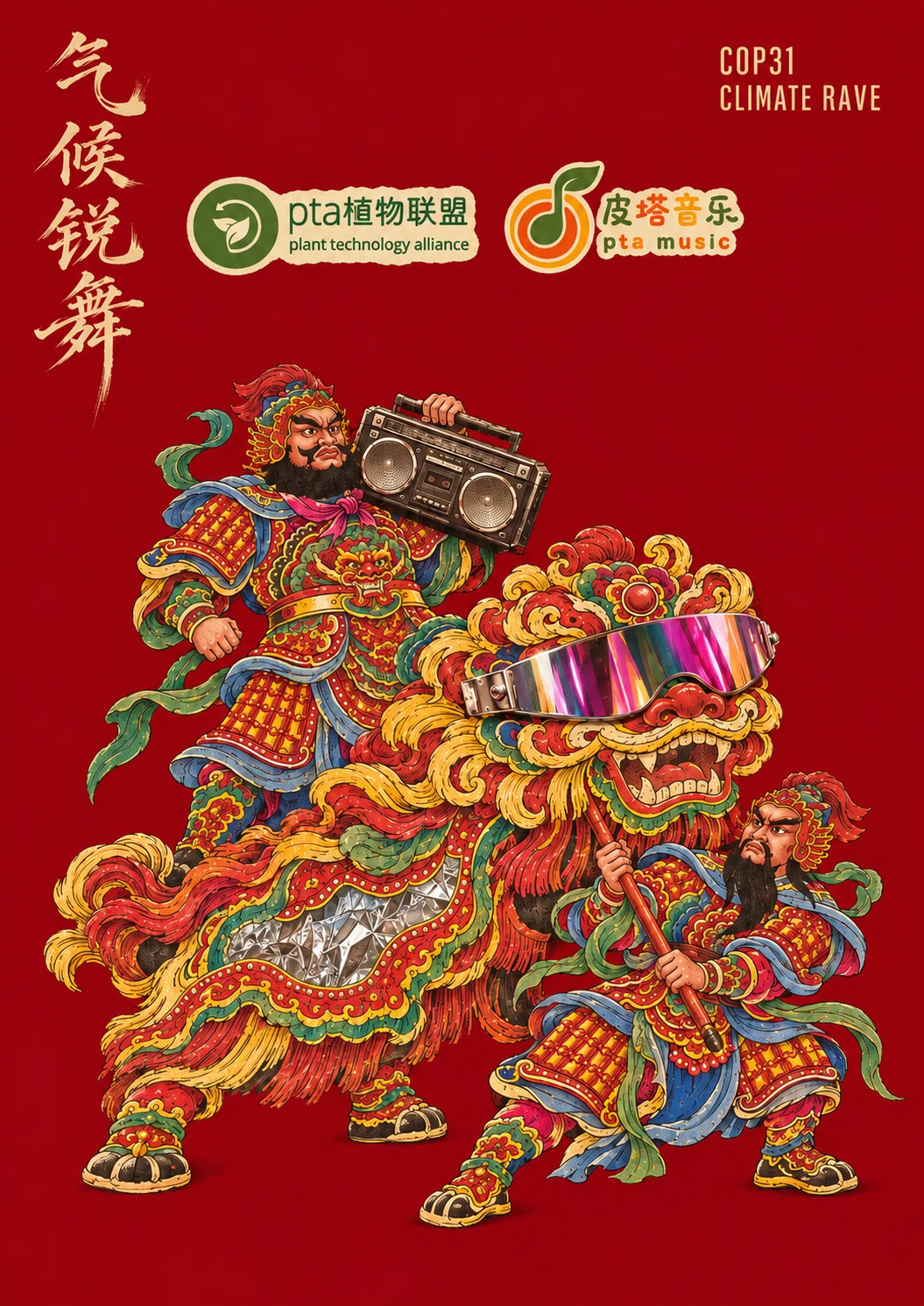
Lion Dance in Print
The Guangdong lion dance is a festival tradition from southern China. Two performers typically animate the lion’s head and body, making it blink, prowl and leap to drums, gongs and cymbals. A mirrored visor and a boombox give this auspicious lion a new look.
Cultural background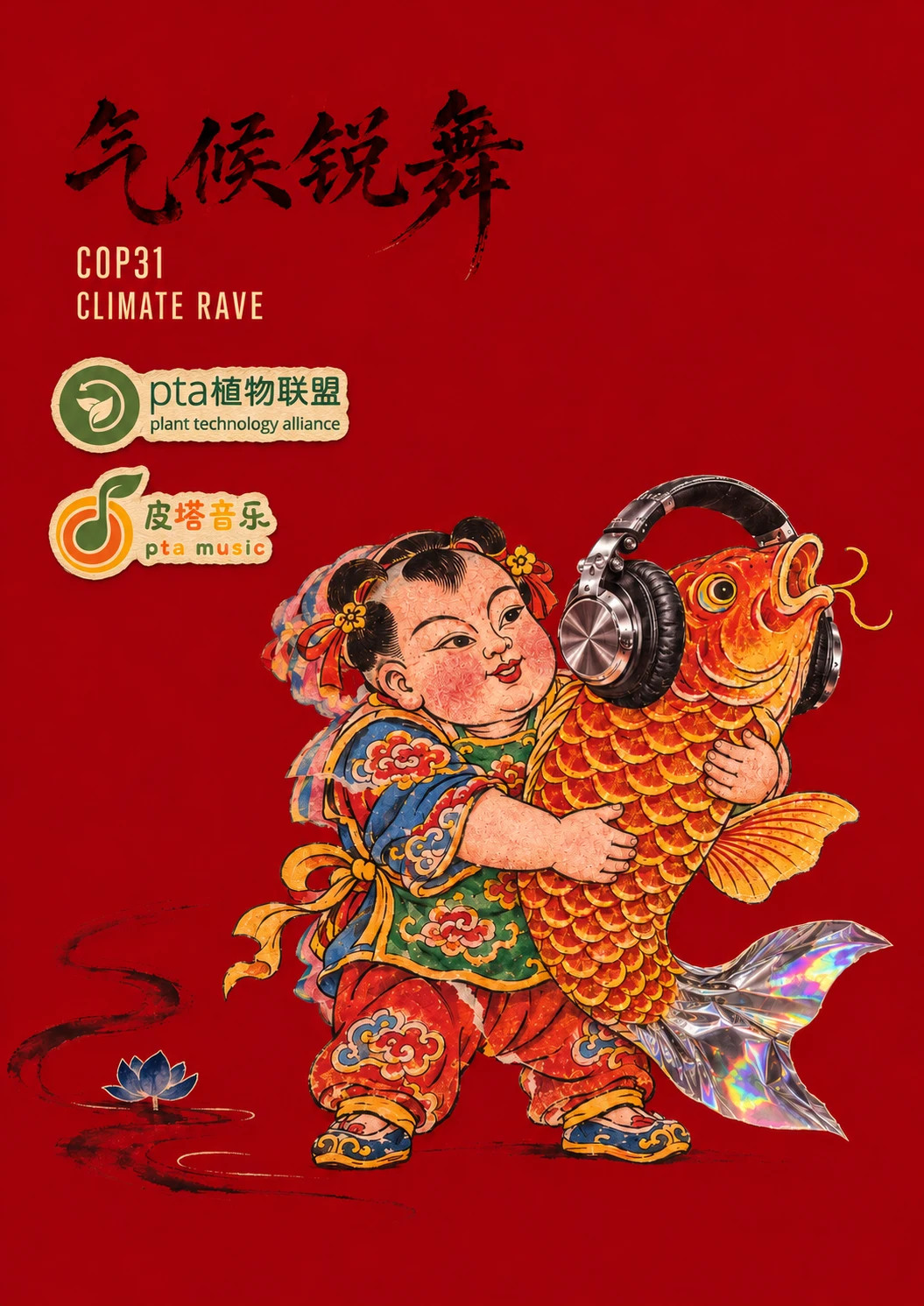
Leaping Carp in Ink
Carp can carry a wish for abundance in New Year prints, since the Chinese words for fish and surplus sound alike. This version sends ink ripples behind the child and the golden carp, whose headphones keep time with the water.
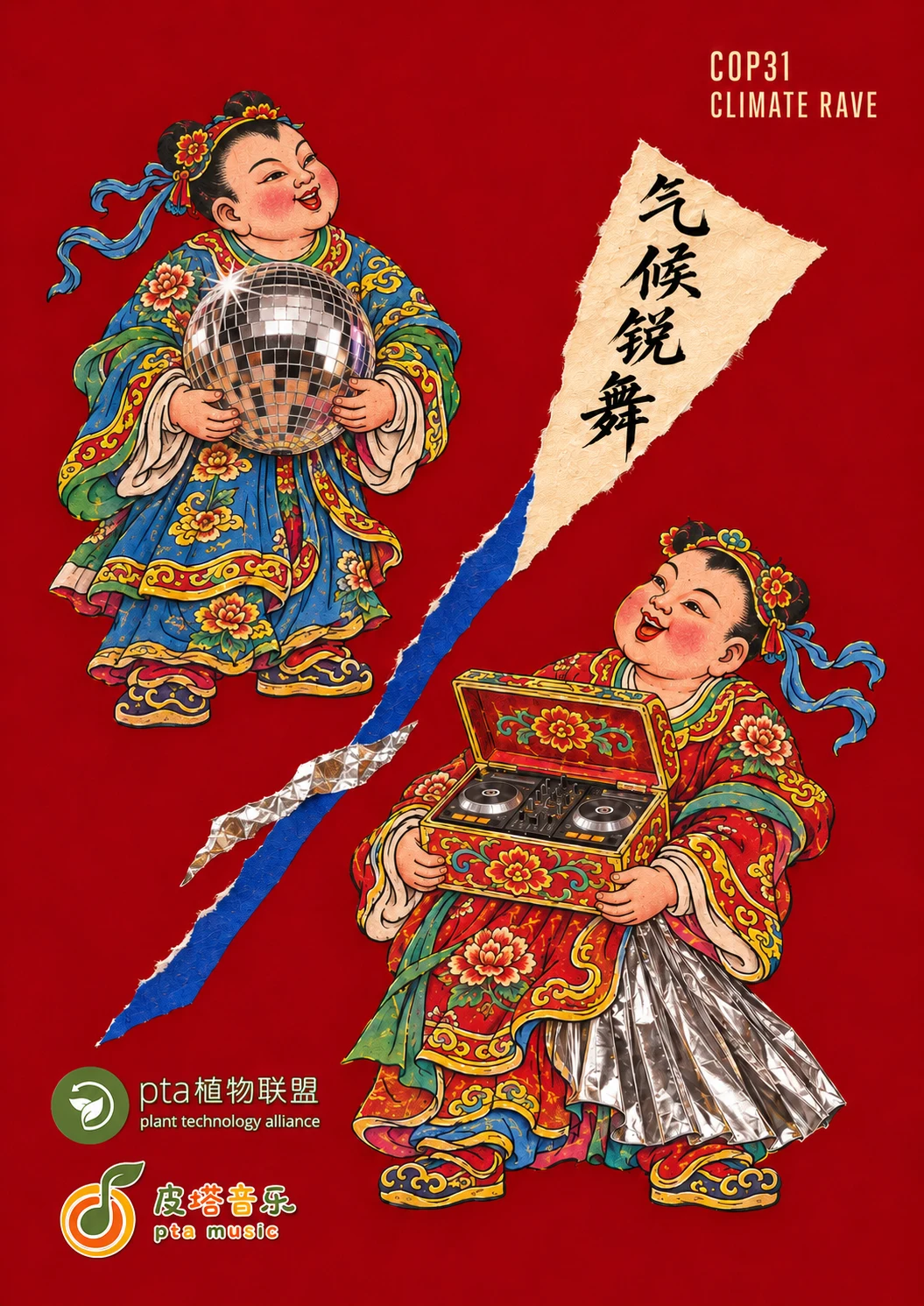
A Composition in Harmony
The paired figures of folk harmony embody a wish to live on good terms. This version sets them apart on either side of a diagonal tear, where the round mirror ball and square box still answer each other.
Cultural backgroundSide B · Figures in Sound
From the matchmaker’s red thread to the night watchman’s clapper, these posters imagine how the work and gestures of familiar figures might sound.
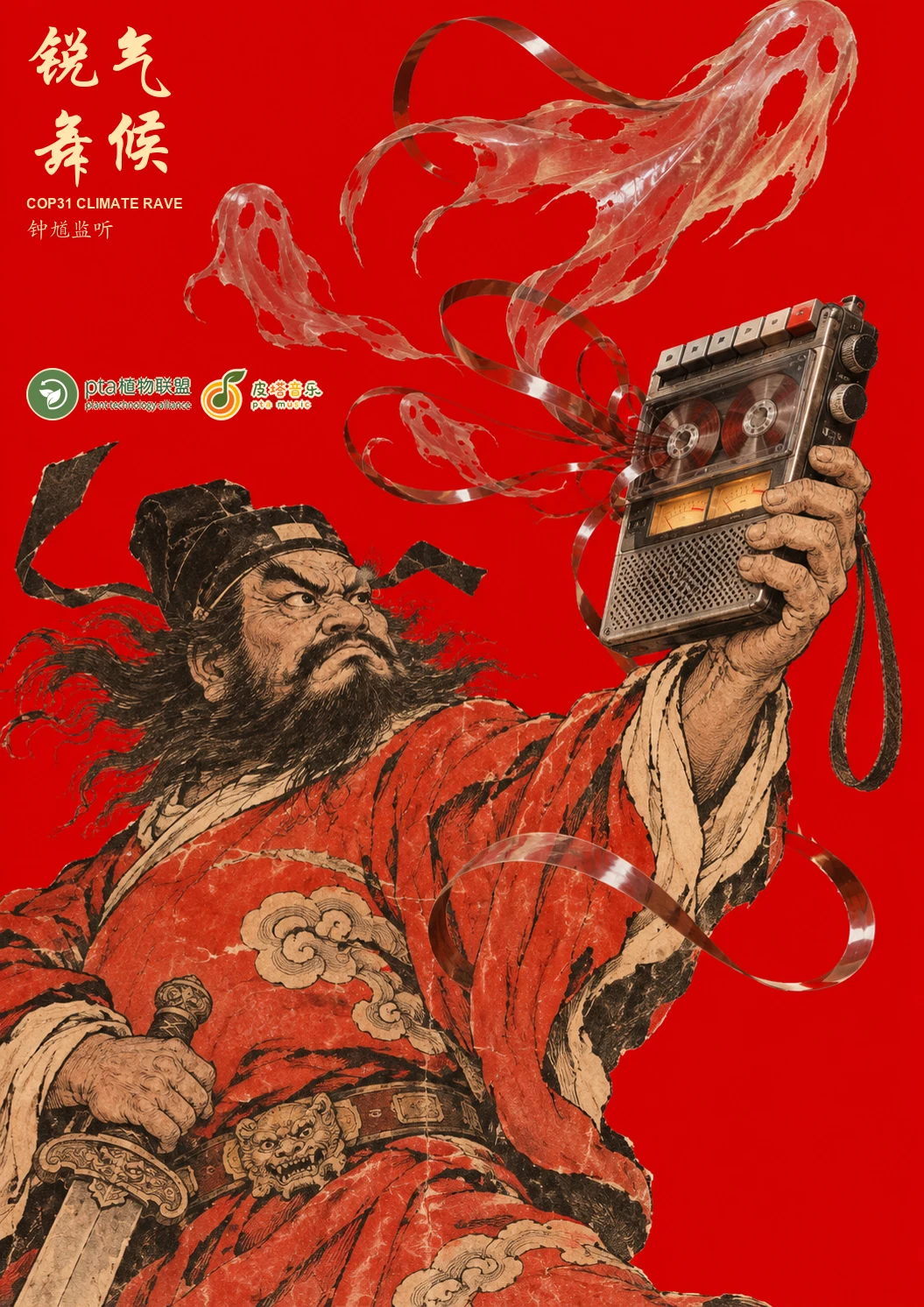
Zhong Kui on the Monitor
Zhong Kui is a demon-queller in Chinese folklore, often pictured with a bristling beard and a fierce stare. His image appears in New Year prints as a protector against evil. Here, the tape from his cassette recorder curls into ghostly figures.
Cultural background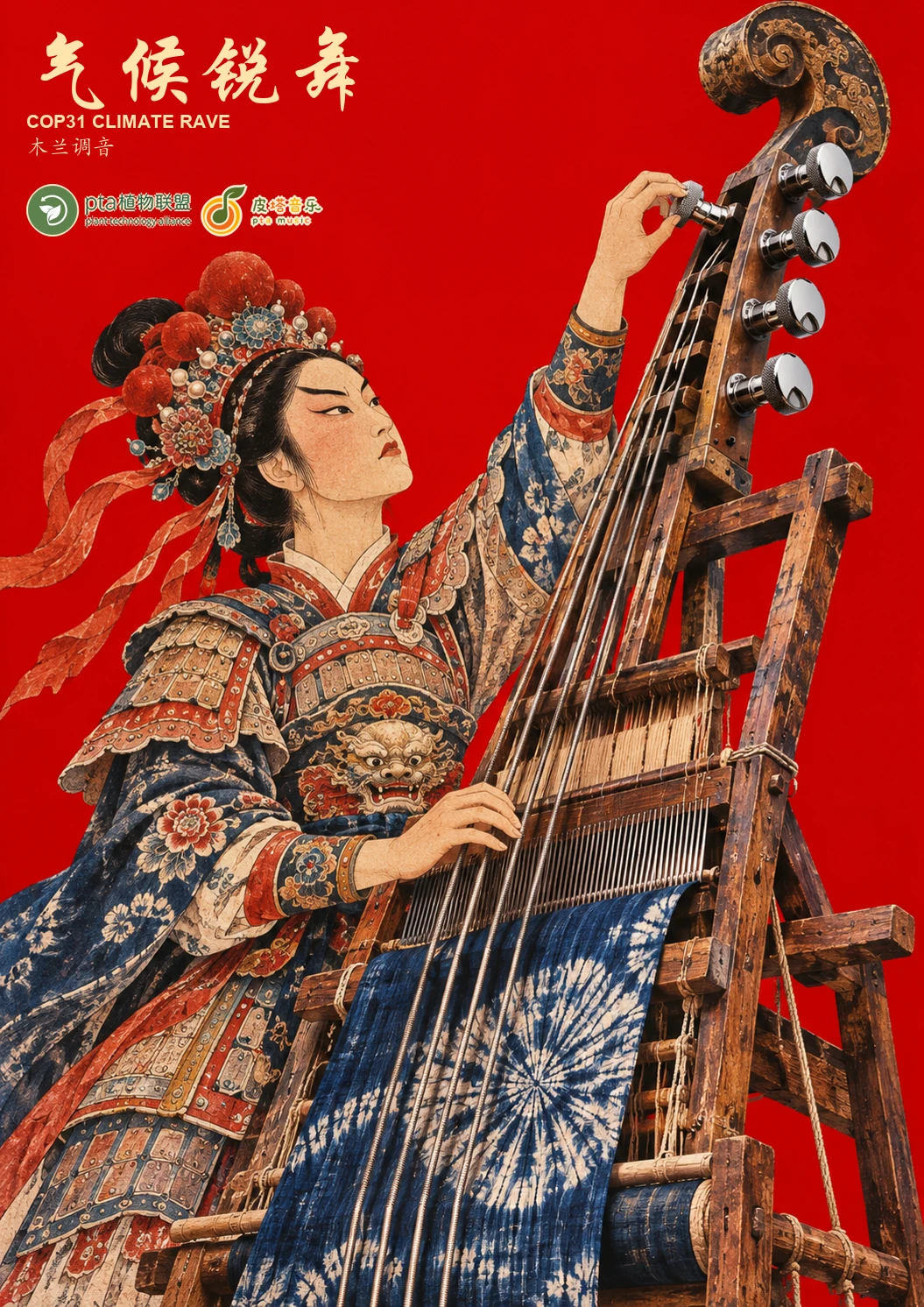
Mulan Tunes Up
Hua Mulan is the heroine of the Ballad of Mulan. She disguises herself as a man to take her father’s place in the army, then turns down an official post and returns home. The ballad opens with Mulan at her loom, which the poster reimagines as a giant string instrument she tunes by hand.
Cultural background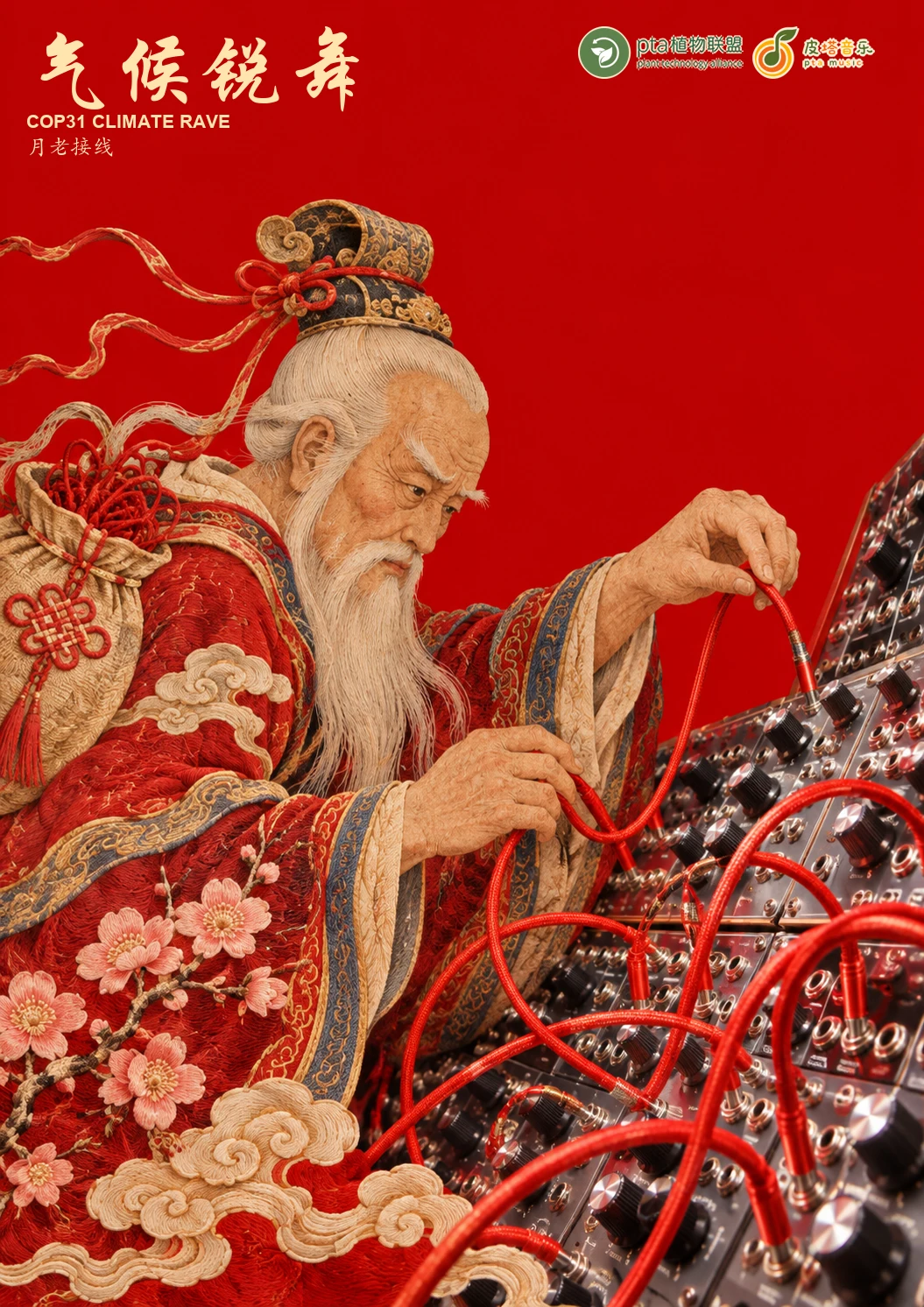
The Matchmaker Patches In
Yuelao, the Old Man Under the Moon, is a matchmaker in Chinese folklore who joins fated partners with red thread. Here the thread becomes a synthesizer’s patch cables, making a different kind of connection.
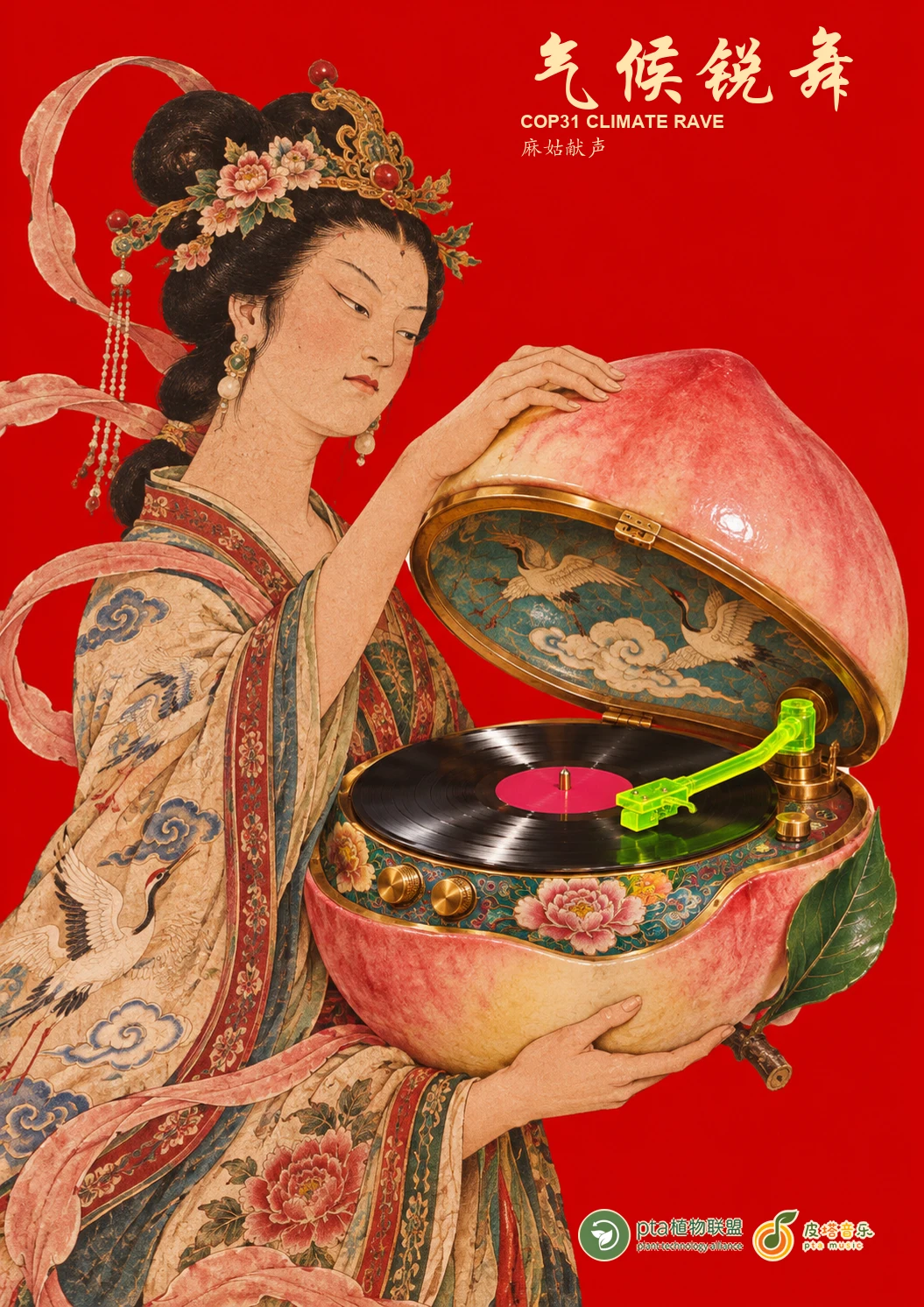
Magu Offers a Record
Magu is a Daoist immortal often depicted bringing birthday blessings of long life. Here she opens a longevity peach to reveal a miniature record player, turning an auspicious gift into a musical one.
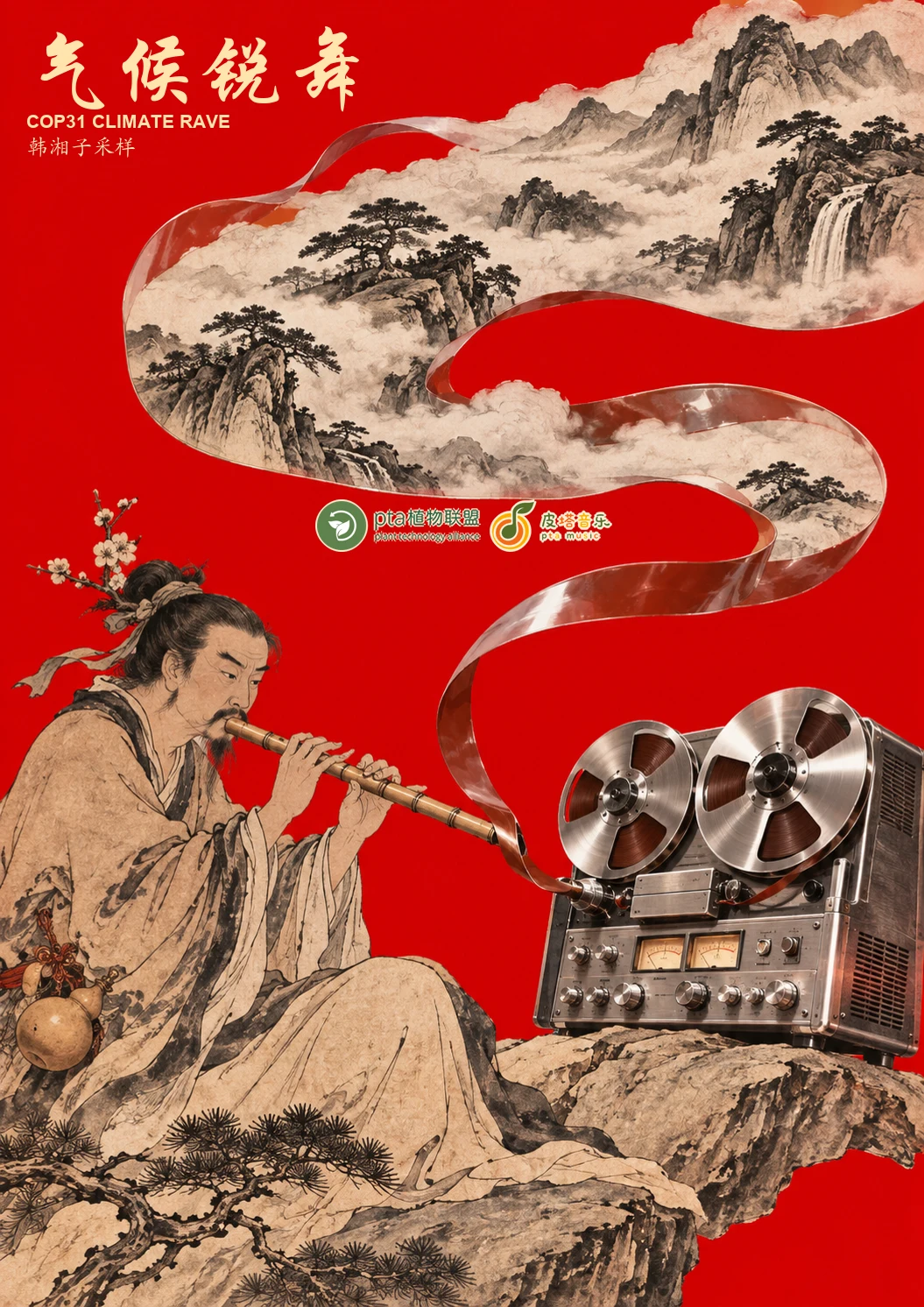
Han Xiangzi Samples a Flute
Han Xiangzi is one of the Eight Immortals of Daoist lore, recognizable by his bamboo flute. The Ming painter Liu Jun depicted him playing it while walking on waves. Here, he plays beside a reel-to-reel recorder, its tape unfurling into an ink landscape.
Cultural background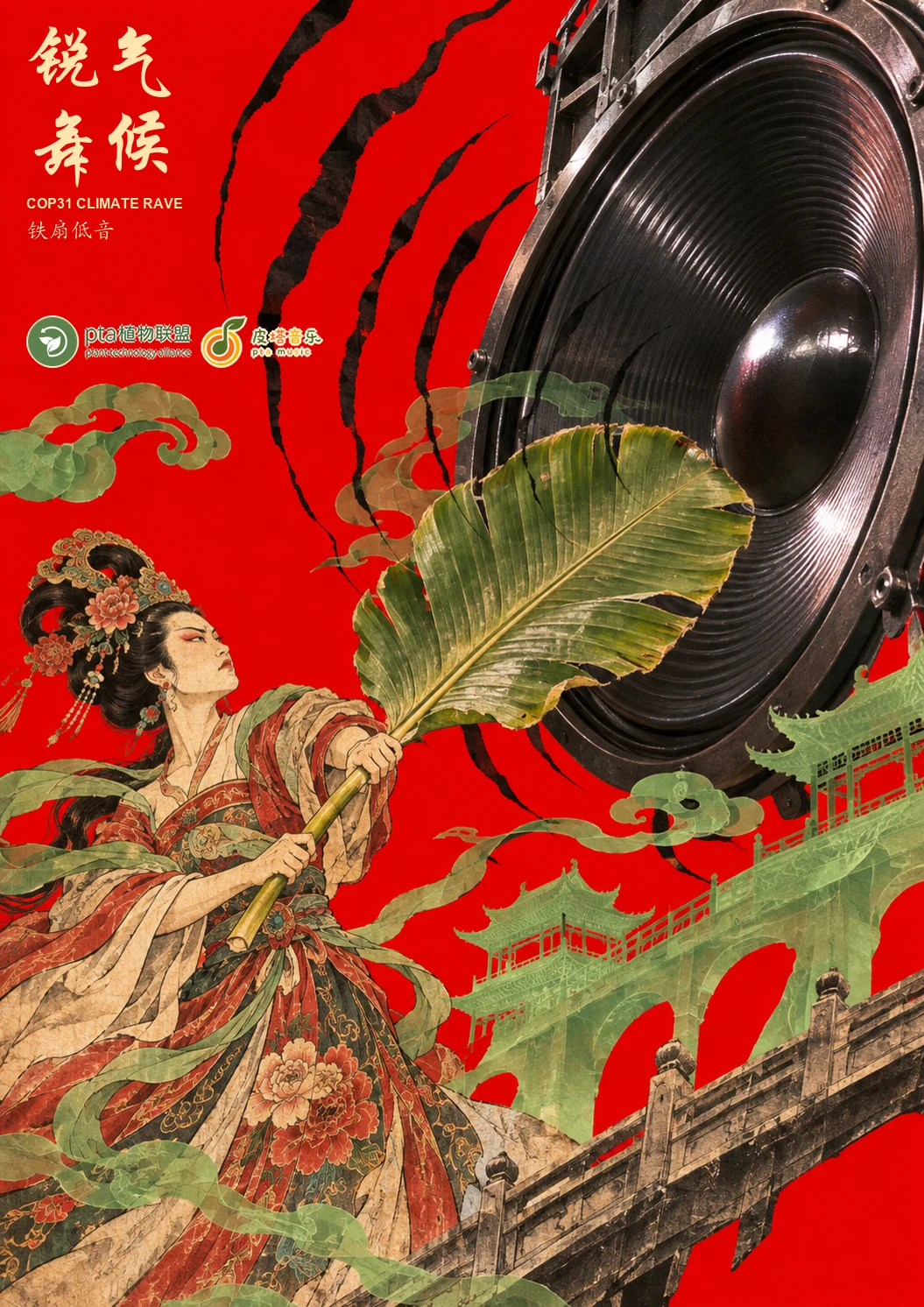
Iron Fan, Deep Bass
In Journey to the West, Sun Wukong needs Princess Iron Fan’s magical Plantain Fan to extinguish the Flaming Mountains. Here, the fan faces a huge bass speaker, turning a gust of wind into a low note you can almost feel.
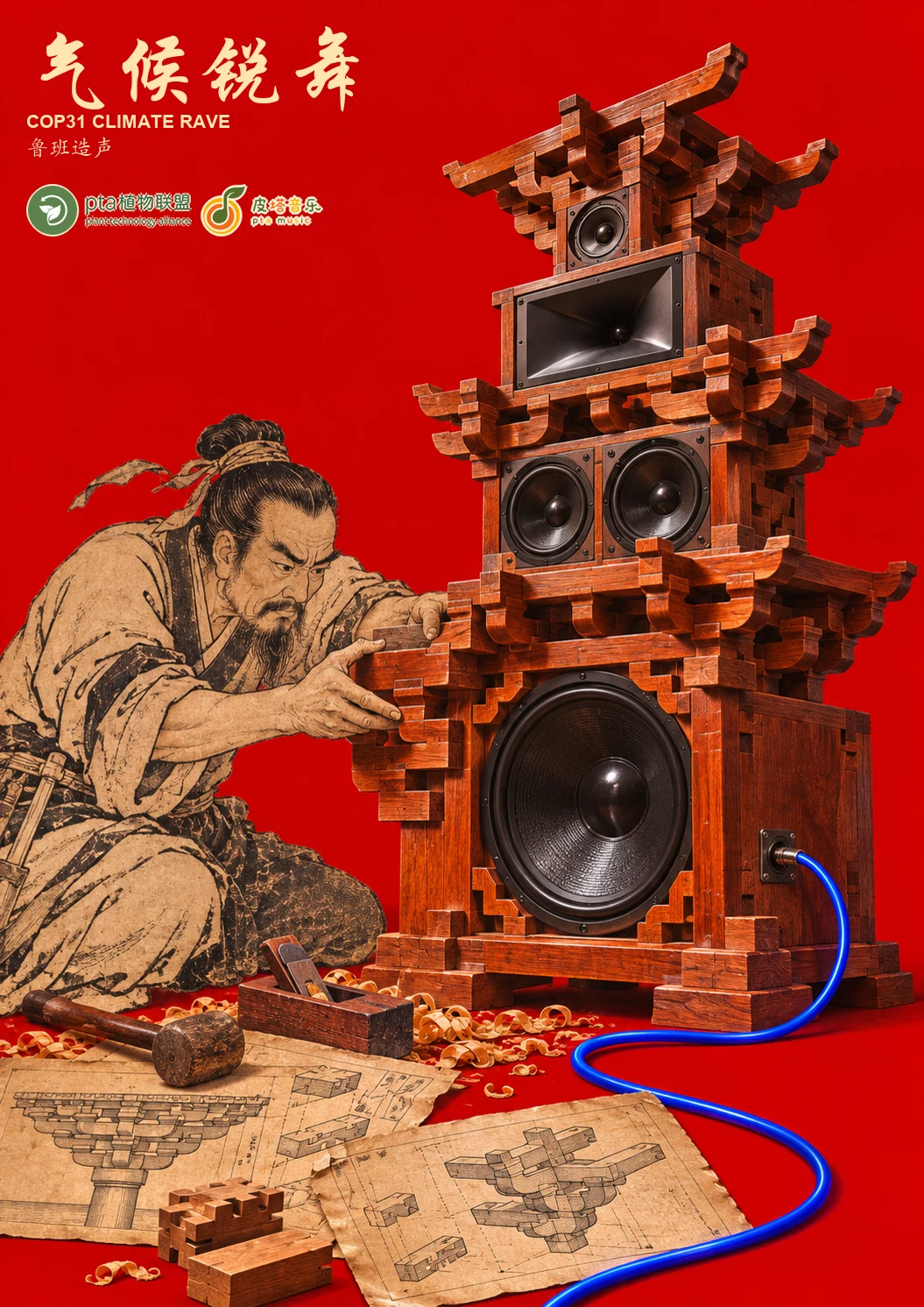
Lu Ban Builds a Sound System
Lu Ban is revered by Chinese carpenters as an ancestral master, and folklore credits him with many woodworking inventions. The poster gives his speaker stack the joints and tiers of timber architecture, like a tiny building made to make sound.
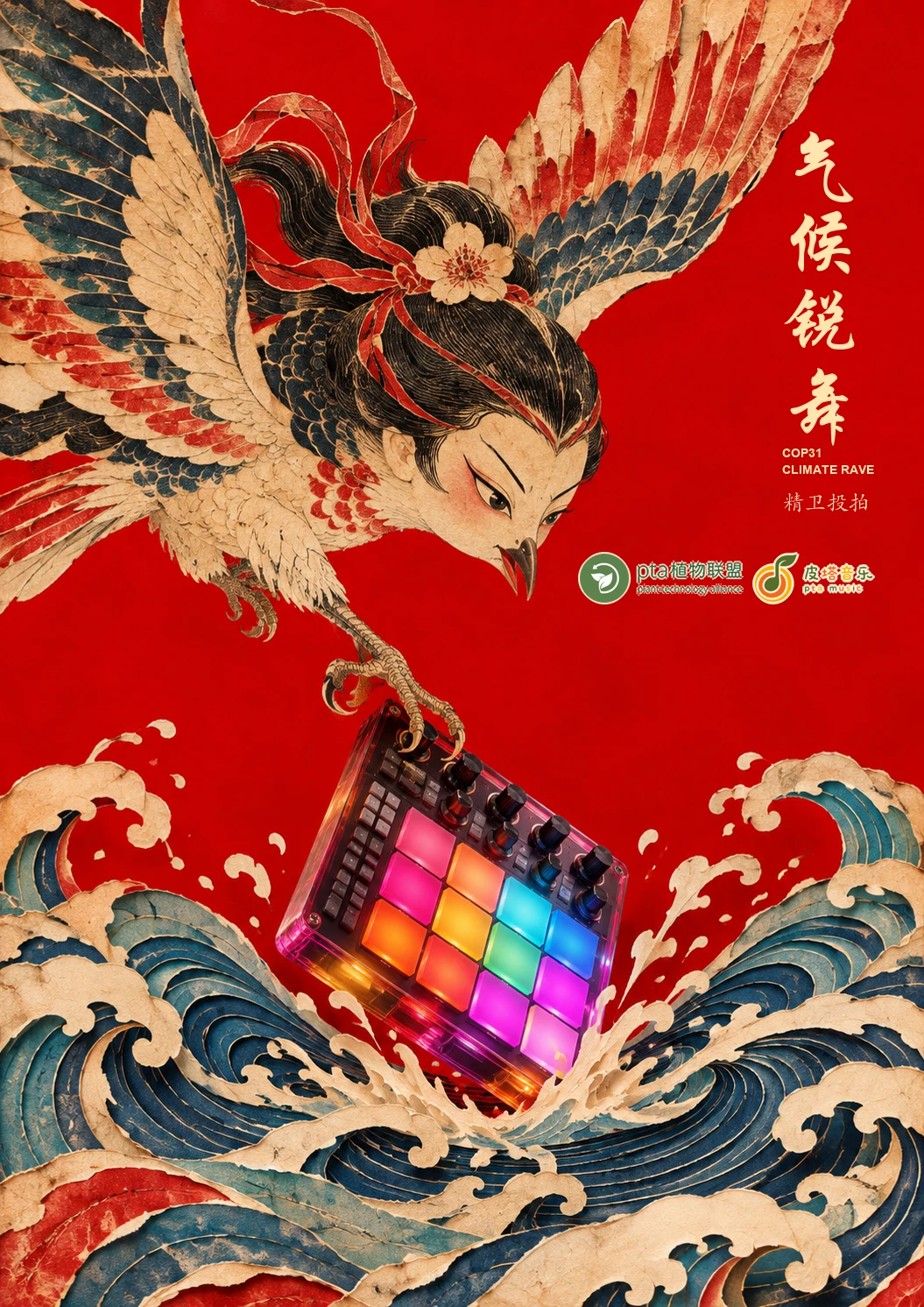
Jingwei Drops a Beat
In the Classic of Mountains and Seas, the Flame Emperor’s daughter drowns in the sea and becomes Jingwei, a bird that carries twigs and stones to fill it. A glowing drum pad enters the surf in this version, giving the story of persistence a beat.
Cultural background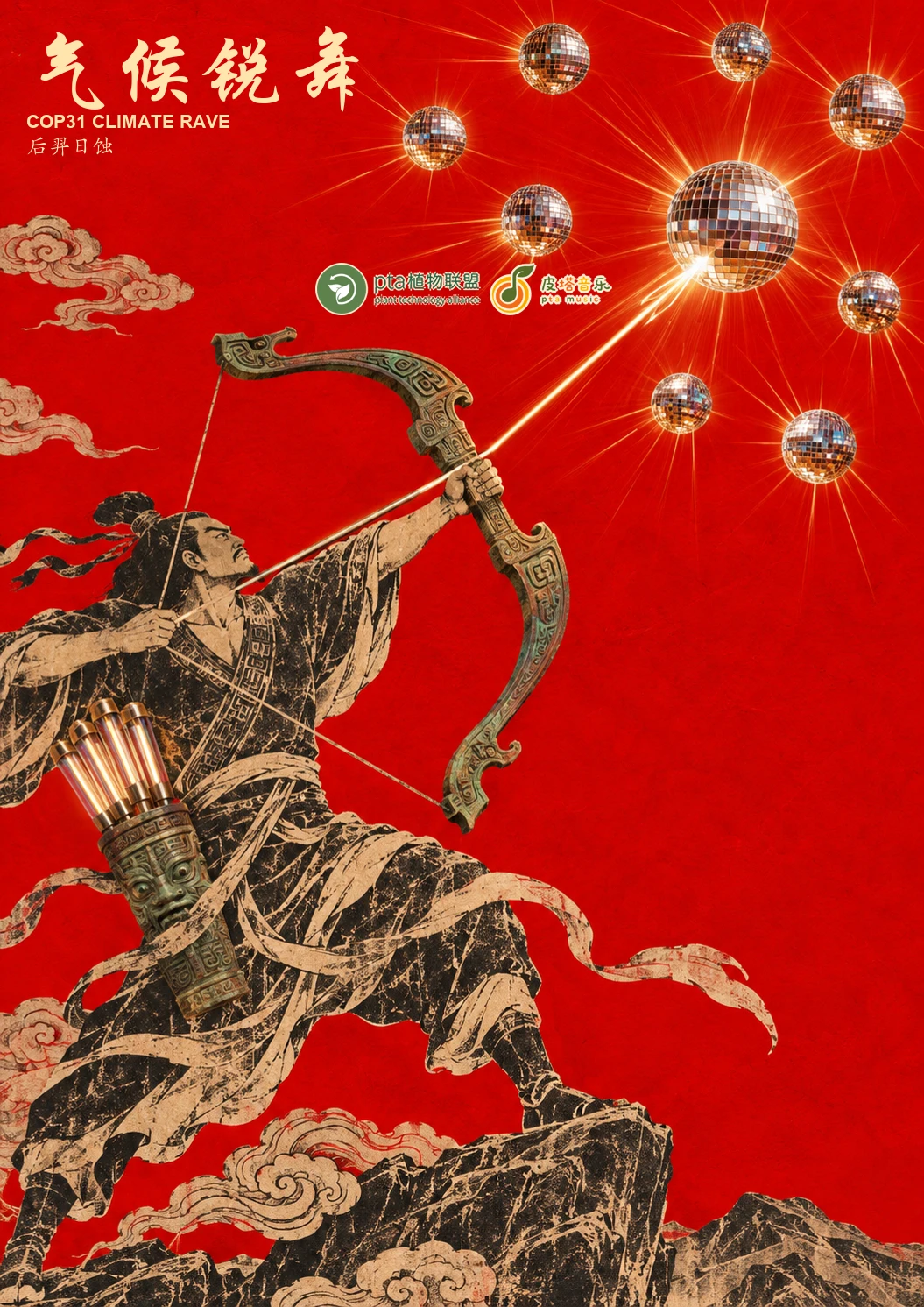
Hou Yi’s Eclipse
Hou Yi is the legendary archer who saved the land when ten suns rose together and scorched the Earth. He shot down nine, leaving one to light the world. On the poster, mirrored disco balls take the place of the blazing suns.
Cultural background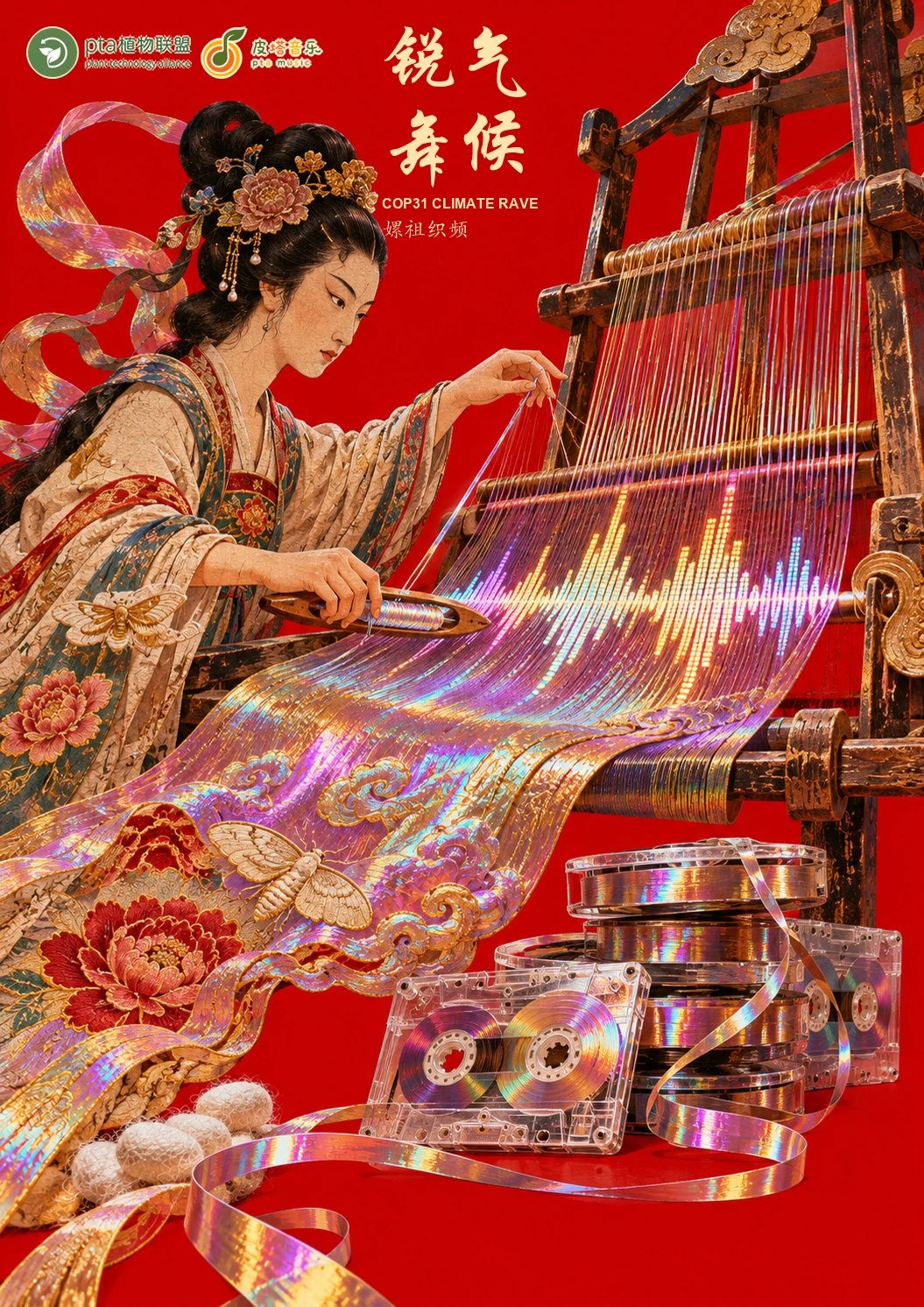
Leizu Weaves Sound
In Chinese legend, Leizu was the wife of the Yellow Emperor. She is credited with teaching people to raise silkworms and reel silk from their cocoons, and is honored as the patron of silkworm raising. Here, a glowing waveform runs through the threads, echoed by the cassette tapes at her feet.
Cultural background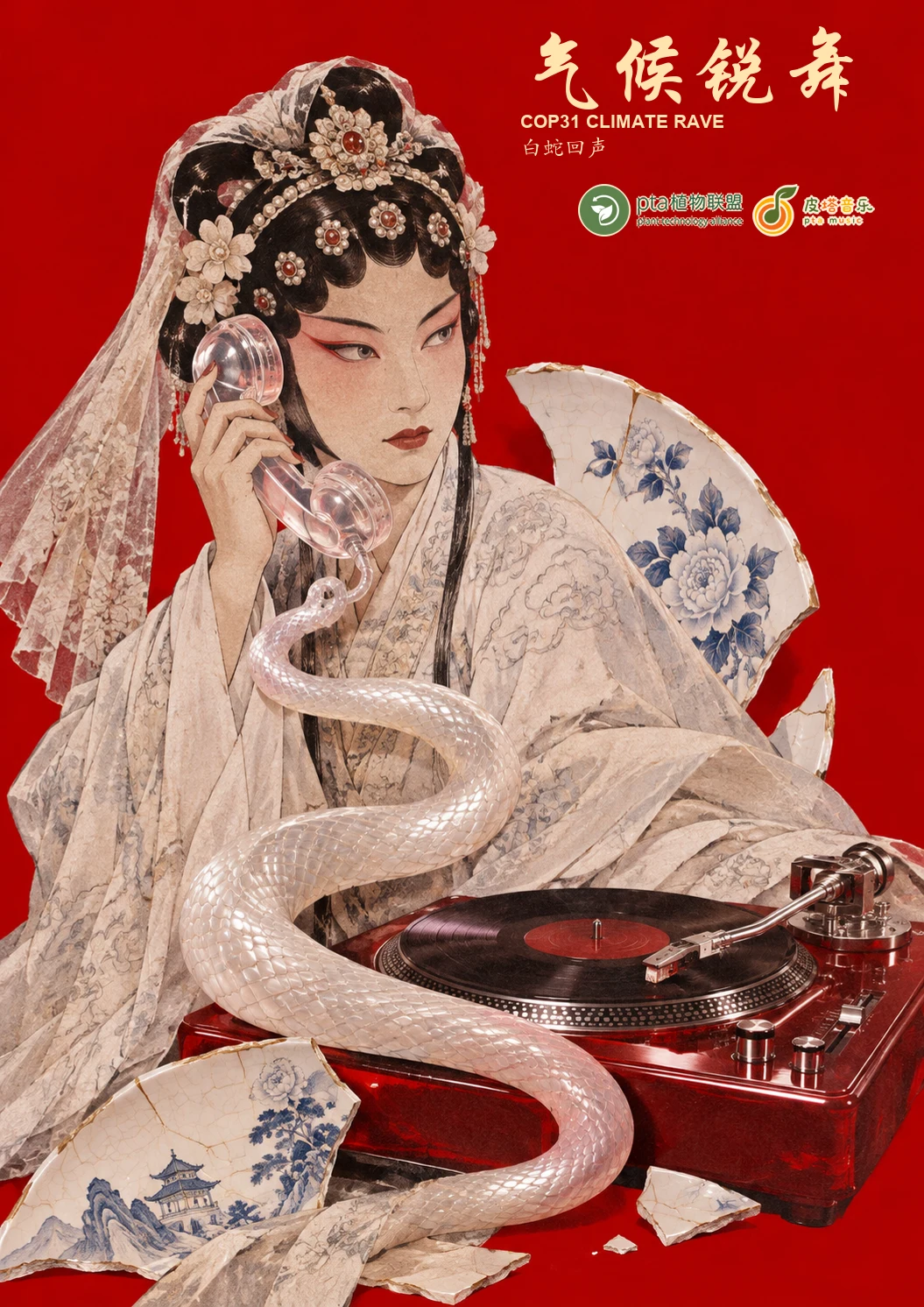
White Snake Echo
Bai Suzhen, the heroine of the Legend of the White Snake, is a serpent spirit who takes human form and falls in love with Xu Xian. Told in folklore and on the opera stage, the story often begins with a meeting at Hangzhou’s West Lake. The poster borrows the look of Chinese opera and sets Bai and the snake beside a turntable.
Cultural background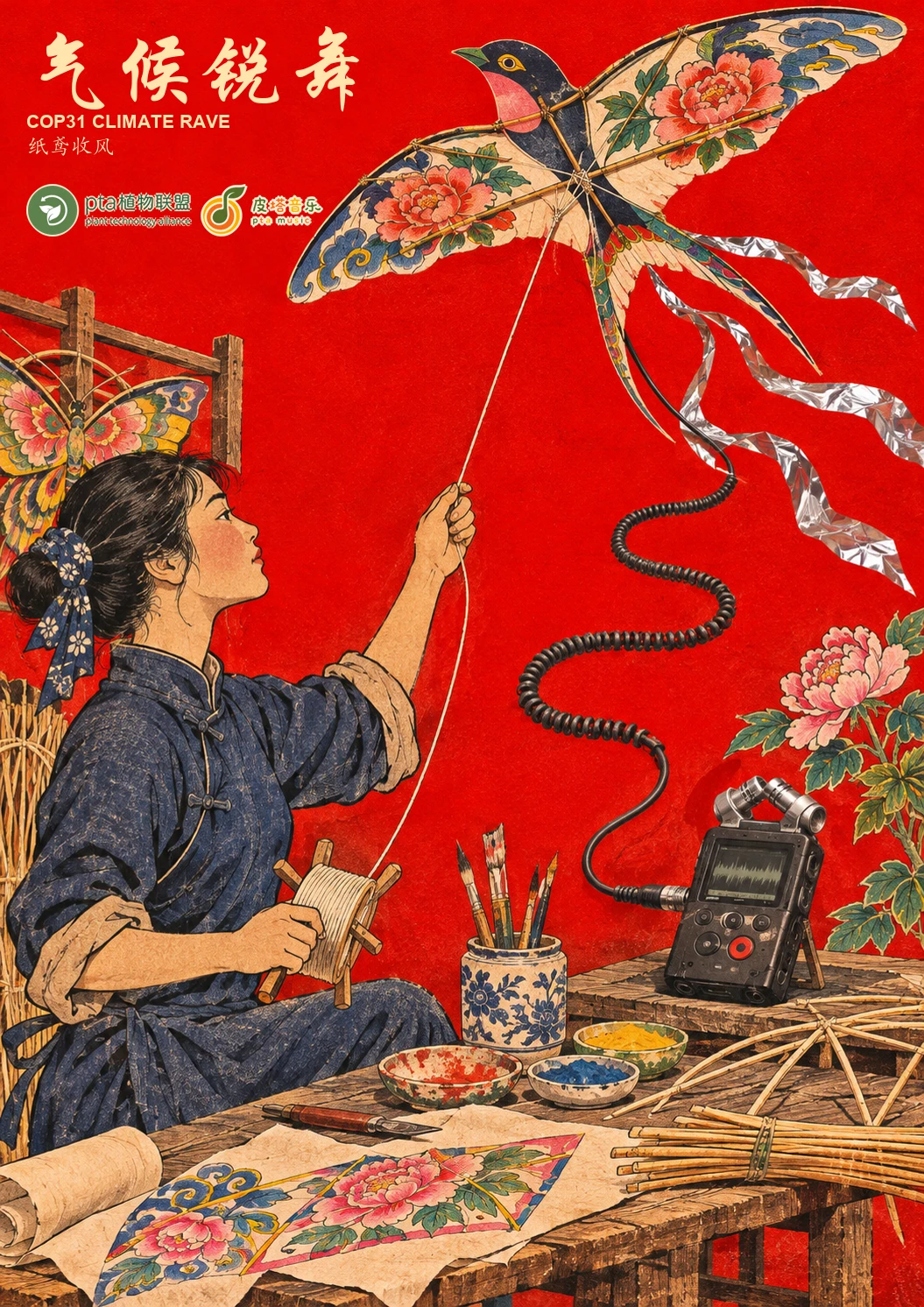
The Kite Catches the Wind
Zhiyuan is an old Chinese word for a paper kite. Traditional makers often lash a bamboo frame and cover it in paper or silk. Here, a line that looks like an audio cable makes the kite seem to collect wind for the recorder.
Cultural background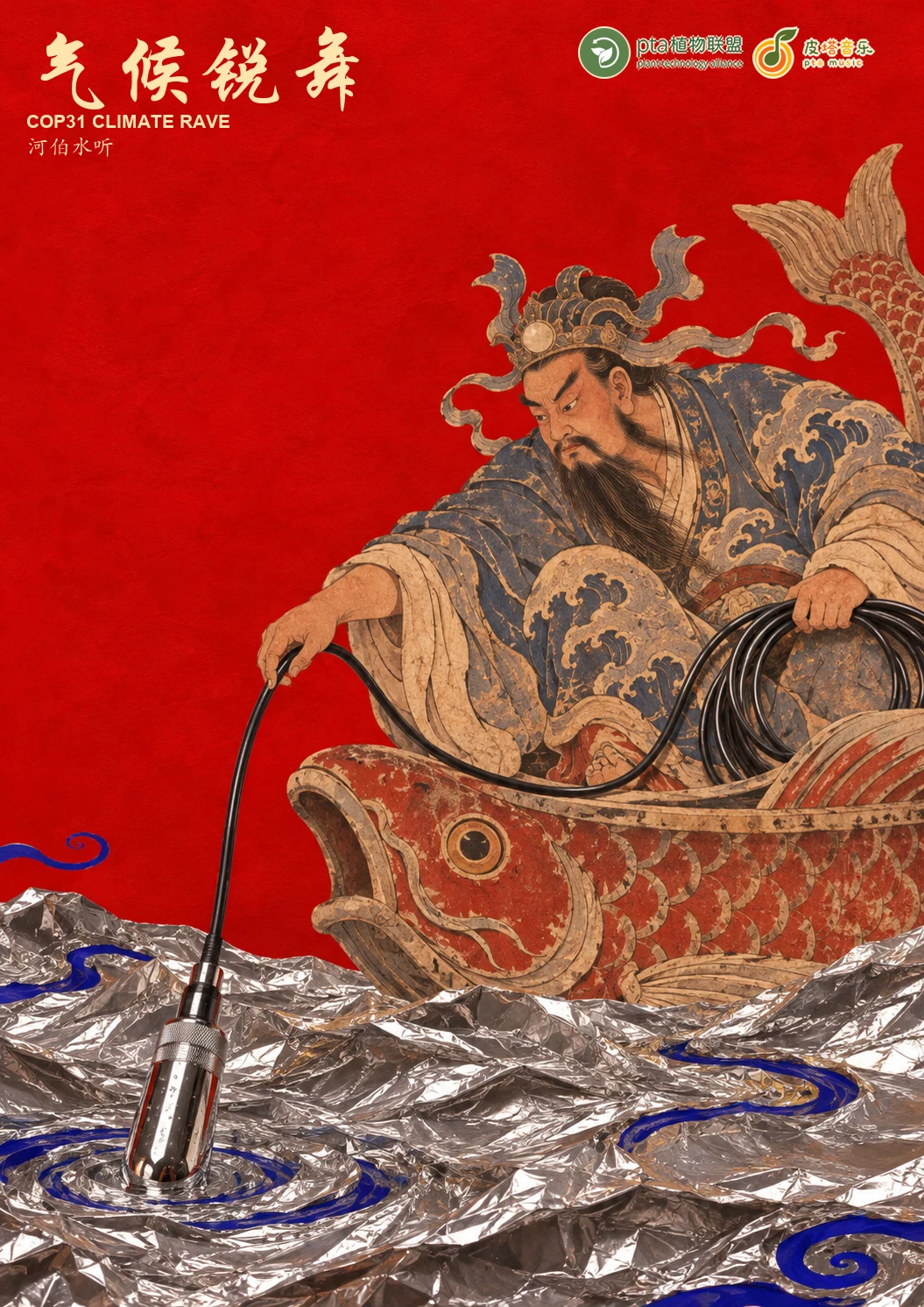
The River God Listens
Hebo is the river god associated with the Yellow River and appears in early texts such as the Songs of Chu. From a fish-shaped boat, he lowers a wired microphone into a silver-foil river to listen beneath its surface.
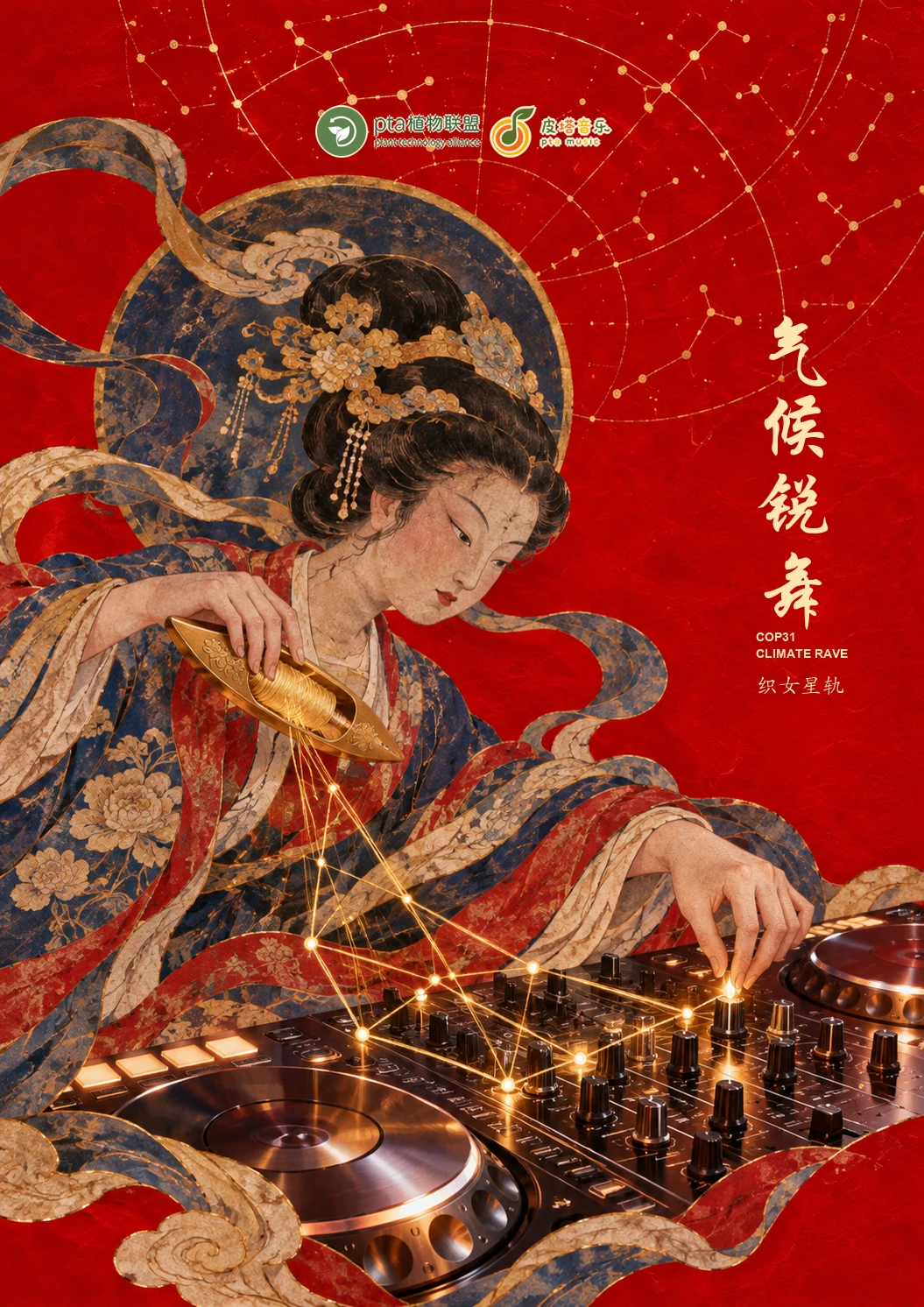
The Weaver Girl’s Star Trails
The Weaver Girl is a celestial weaver associated with the star Vega. In the Qixi story, she and the Cowherd are separated by the Milky Way and meet on the seventh night of the seventh lunar month. In the poster, threads of starlight reach down to the decks.
Cultural background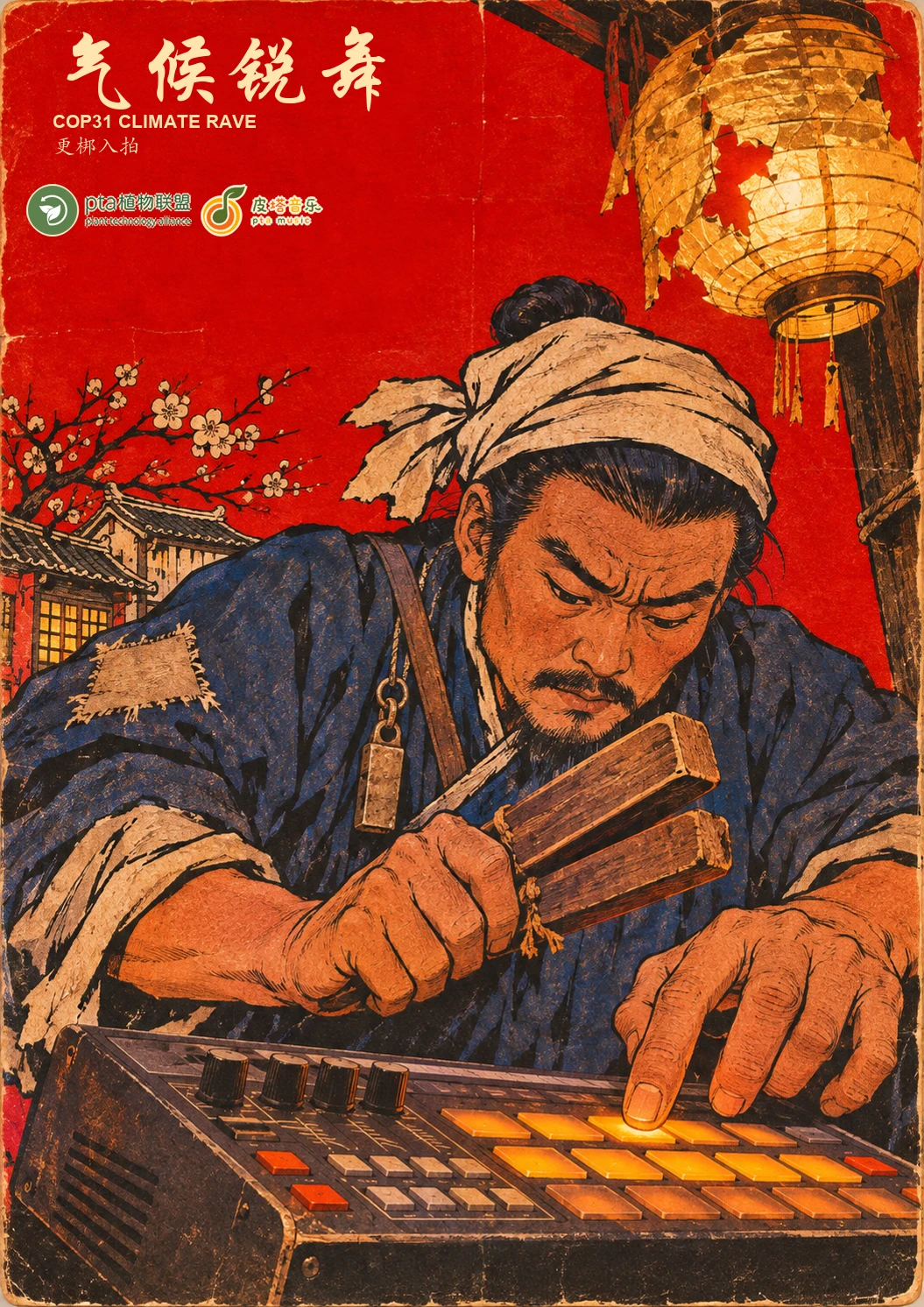
The Night Watchman Keeps Time
Night watchmen once walked the streets marking the night watches with a clapper or gong. Here, the wooden clapper sits beside an electronic drum pad, and the rhythm of telling time becomes a beat.
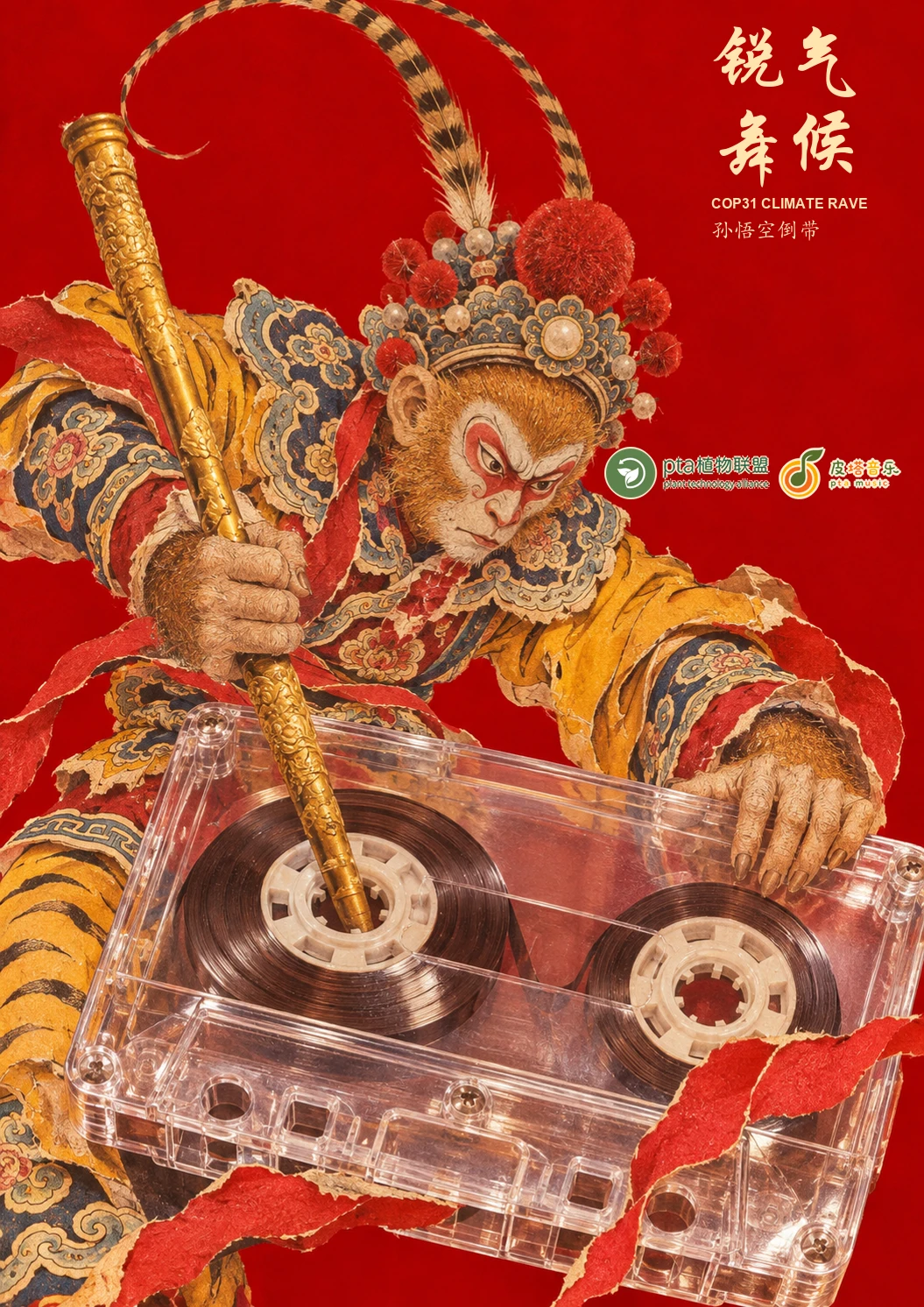
Sun Wukong Rewinds
Sun Wukong, the Monkey King in Journey to the West, protects the pilgrim monk Tripitaka and is famed for his transformations and gold-banded staff. Here, he uses the staff to spool back a giant cassette, as if rewinding the story.
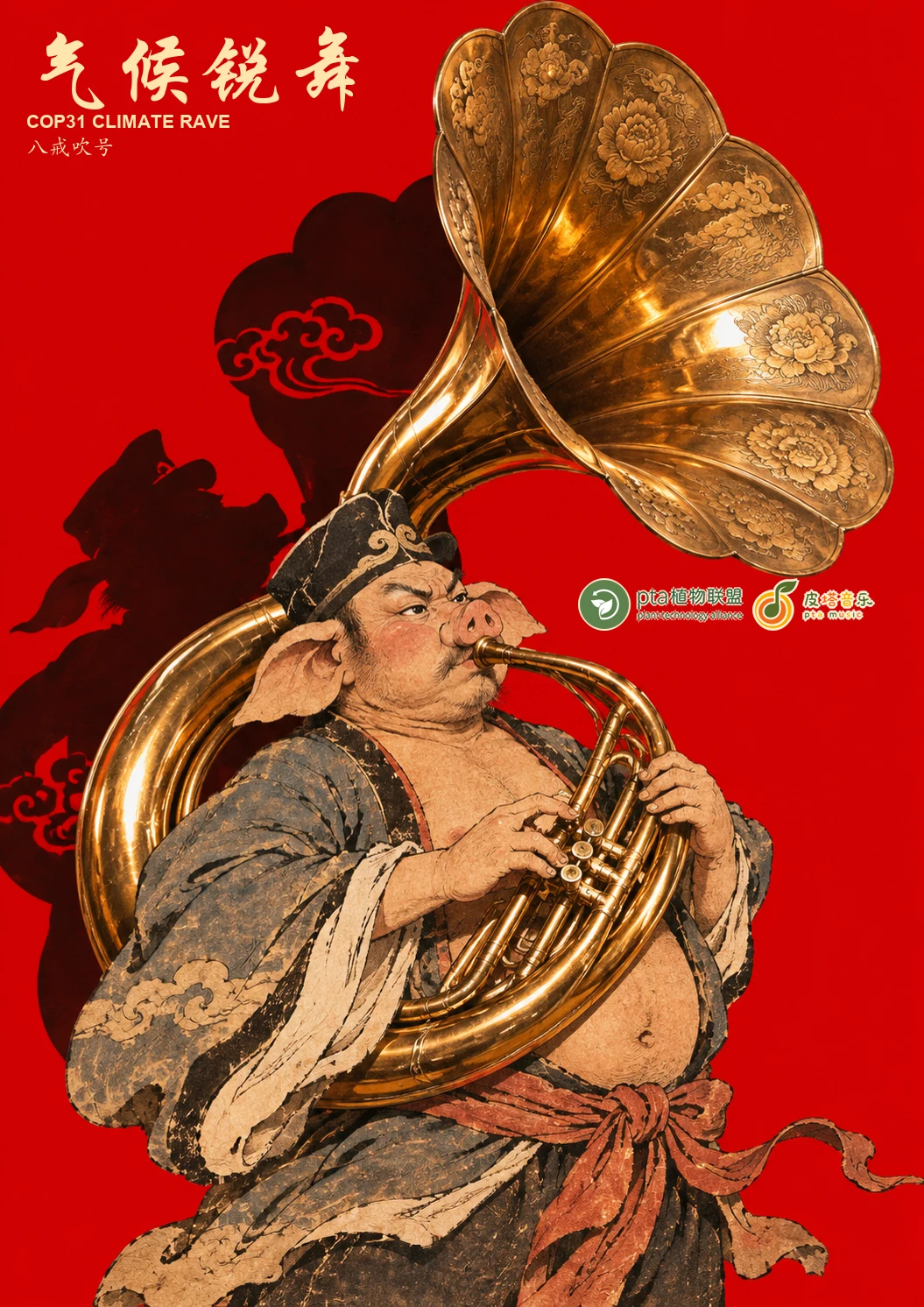
Pigsy Blows His Horn
Zhu Bajie, often called Pigsy in English, is a pilgrim in Journey to the West, known for his pig features, nine-toothed rake and comic appetites. Here he plays a brass horn whose oversized bell is as expressive as he is.
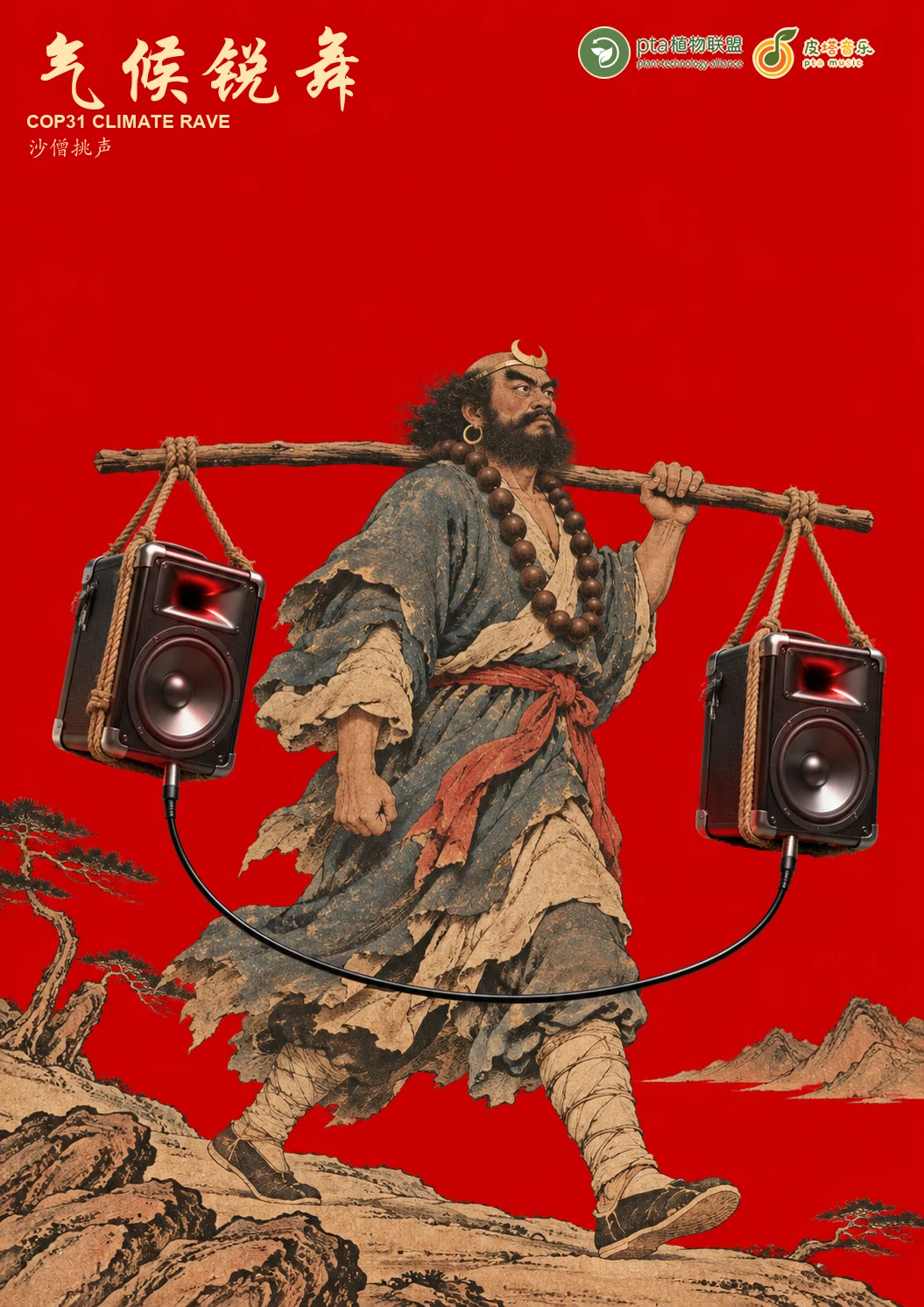
Sha Wujing Carries the Sound
Sha Wujing, sometimes called Sandy, is one of the disciples who guard Tripitaka in Journey to the West. A shoulder pole and luggage are familiar images of the pilgrimage. Here, twin speakers are the load he carries through the hills.
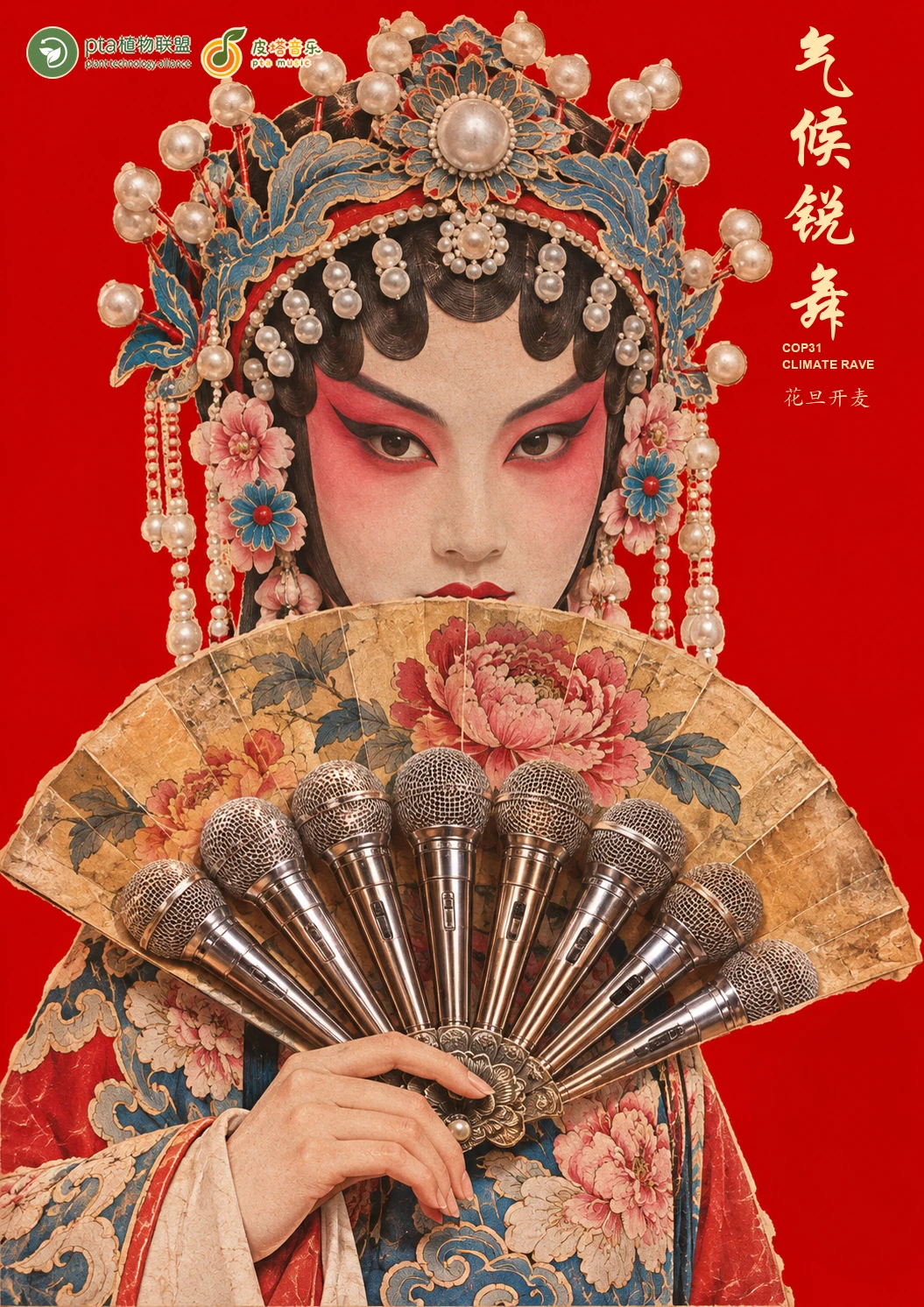
The Huadan Takes the Mic
Huadan is a female-role type in Chinese opera, often portraying lively young women through expressive gestures and movement. The microphones fan out like the ribs of her folding fan, catching the pose just before she speaks.
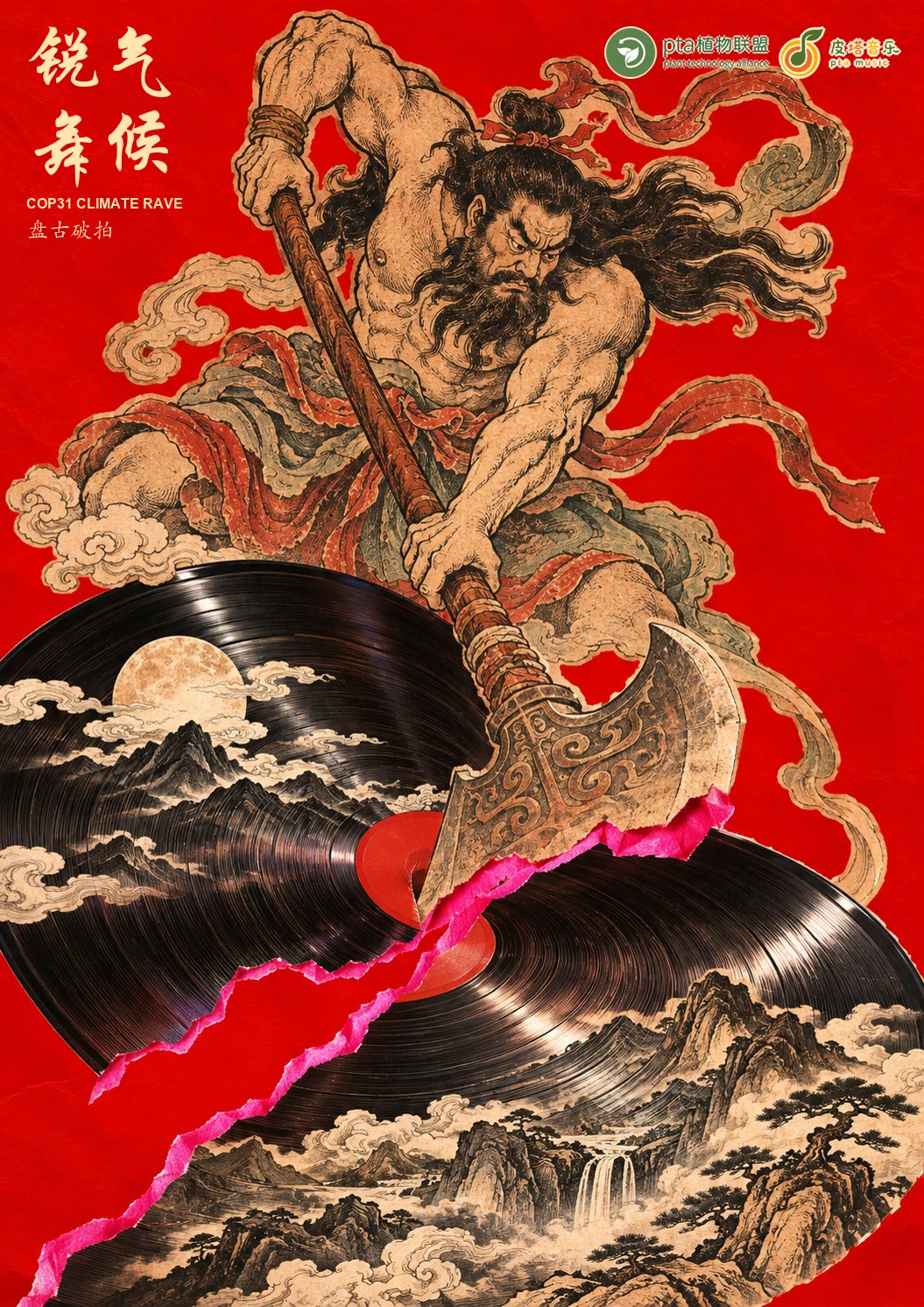
Pangu Breaks the Beat
Pangu is the giant who separates heaven and earth from primordial chaos in a Chinese creation myth. Here his axe splits open a vinyl record to reveal a landscape, letting a world emerge in the break between beats.
A night in Antalya’s Old Town
Climate Rave was conceived as an evening of music, dancing and conversation for the COP31 community after a day of meetings and negotiations. The programme paired new electronic music from China and bold remixes with familiar dance-floor favourites.
- 21:00–22:00Connect & Unwind
- Mellow music and time to talk and meet new people.
- 22:00–midnightDance & Release
- A faster pace, with Chinese club music, remixes and dance-floor favourites.